This website uses cookies to improve your experience. We\'ll assume you\'re ok with this, but you can opt-out if you wish. Read More
Budget Golfer’s Complete Guide: Save $2,000+ This Year

Categories :
Master the art of affordable golf without sacrificing your passion for the game
Bottom Line Up Front: The average golfer spends $3,500-$5,000 annually on their hobby, but with strategic planning and smart choices, you can easily cut $2,000+ from your golf expenses while actually improving your game experience. This comprehensive guide reveals exactly how to do it.
The Hidden Costs Draining Your Golf Budget
Before diving into savings strategies, let’s identify where your money actually goes. Most golfers underestimate their true annual golf spending by 40-60%.
Typical Annual Golf Expenses Breakdown:
- Green fees: $1,800-$2,500
- Equipment purchases: $800-$1,200
- Golf lessons: $400-$800
- Travel and accommodations: $600-$1,500
- Food and beverages: $300-$600
- Maintenance and accessories: $200-$400
Total Average: $4,100-$7,000 per year
[Annual Golf Spending Breakdown Chart]
Where Your Golf Money Goes – Average Annual Expenses by Category
┌─────────────────────┬─────────┬─────────┬───────────────────────┐
│ Expense Category    │ Low End │ High End│ Savings Opportunity   │
├─────────────────────┼─────────┼─────────┼───────────────────────┤
│ Green Fees          │ $1,800  │ $2,500  │ $800-$1,200          │
├─────────────────────┼─────────┼─────────┼───────────────────────┤
│ Equipment           │ $800    │ $1,200  │ $600-$900            │
├─────────────────────┼─────────┼─────────┼───────────────────────┤
│ Lessons             │ $400    │ $800    │ $300-$500            │
├─────────────────────┼─────────┼─────────┼───────────────────────┤
│ Travel              │ $600    │ $1,500  │ $400-$800            │
├─────────────────────┼─────────┼─────────┼───────────────────────┤
│ Food/Beverages      │ $300    │ $600    │ $200-$400            │
├─────────────────────┼─────────┼─────────┼───────────────────────┤
│ Maintenance         │ $200    │ $400    │ $100-$200            │
├─────────────────────┼─────────┼─────────┼───────────────────────┤
│ TOTAL SAVINGS       │         │         │ $2,400-$4,000        │
│ POTENTIAL           │         │         │                       │
└─────────────────────┴─────────┴─────────┴───────────────────────┘
Strategy #1: Master the Art of Affordable Green Fees (Save $800-$1,200)
Municipal Golf Courses: Your Best Friend
Municipal courses offer exceptional value, often providing similar playing conditions to private clubs at 50-70% less cost. These publicly-owned facilities prioritize accessibility and typically feature:
- Well-maintained fairways and greens
- Professional-grade course design
- Lower peak-time pricing
- Reduced cart fees and amenities costs
Pro Tip: Build relationships with municipal course staff. They often know about upcoming deals, maintenance schedules to avoid, and the best times to play for optimal conditions.
Dynamic Pricing Strategies
Golf courses increasingly use dynamic pricing similar to airlines and hotels. Master these patterns to save significantly:
Optimal Booking Windows:
- 7-14 days ahead: Sweet spot for most courses
- Monday-Wednesday: 30-40% lower than weekend rates
- Twilight rounds: Start after 2 PM for 25-50% savings
- Weather-dependent booking: Be flexible for last-minute deals
Membership and Package Deals
Even if you don’t want a full membership, many courses offer:
- 10-round packages: 15-25% savings over individual rounds
- Off-season memberships: 40-60% cheaper than peak-season rates
- Corporate partnerships: Check if your employer has golf discounts
- Military/senior discounts: Often 10-20% off standard rates
Strategy #2: Equipment Savings Without Compromise (Save $600-$900)
The 2-3 Year Equipment Cycle Strategy
Golf equipment technology plateaus quickly. Clubs from 2-3 years ago offer 95% of the performance of current models at 40-60% of the price.
Where to Find Quality Used Equipment:
- Golf course pro shops: Often well-maintained trade-ins
- Golf specialty retailers: Certified pre-owned with warranties
- Online marketplaces: GlobalGolf, 2ndSwing, RockBottomGolf
- End-of-season sales: New equipment at used prices
Equipment Priorities for Maximum Value
Focus your equipment budget where it matters most:
- Putter (40% of your shots): Invest here for immediate improvement
- Wedges (25% of shots): Good wedges last 5-7 years with proper care
- Driver (14 shots per round): Buy previous year’s model for best value
- Irons (35% of shots): Quality sets last 8-10 years
DIY Maintenance Saves Hundreds
Learn basic club maintenance to avoid frequent pro shop visits:
- Grip replacement: $5 per grip vs. $15 at pro shop
- Club cleaning: Proper cleaning extends club life by 2-3 years
- Basic repairs: Minor dents and scratches don’t affect performance
Strategy #3: Smart Course Selection and Timing (Save $400-$700)
The 80/20 Rule for Course Selection
Apply the Pareto Principle: Play 80% of your rounds at affordable courses, reserve 20% for special occasions at premium venues.
Affordable Course Categories:
- Municipal courses: Consistent quality, best overall value
- Public daily-fee courses: Good conditions, reasonable pricing
- Resort courses during off-season: Luxury experience at fraction of peak prices
- Newer courses seeking players: Often offer aggressive introductory pricing
Seasonal Strategy Planning
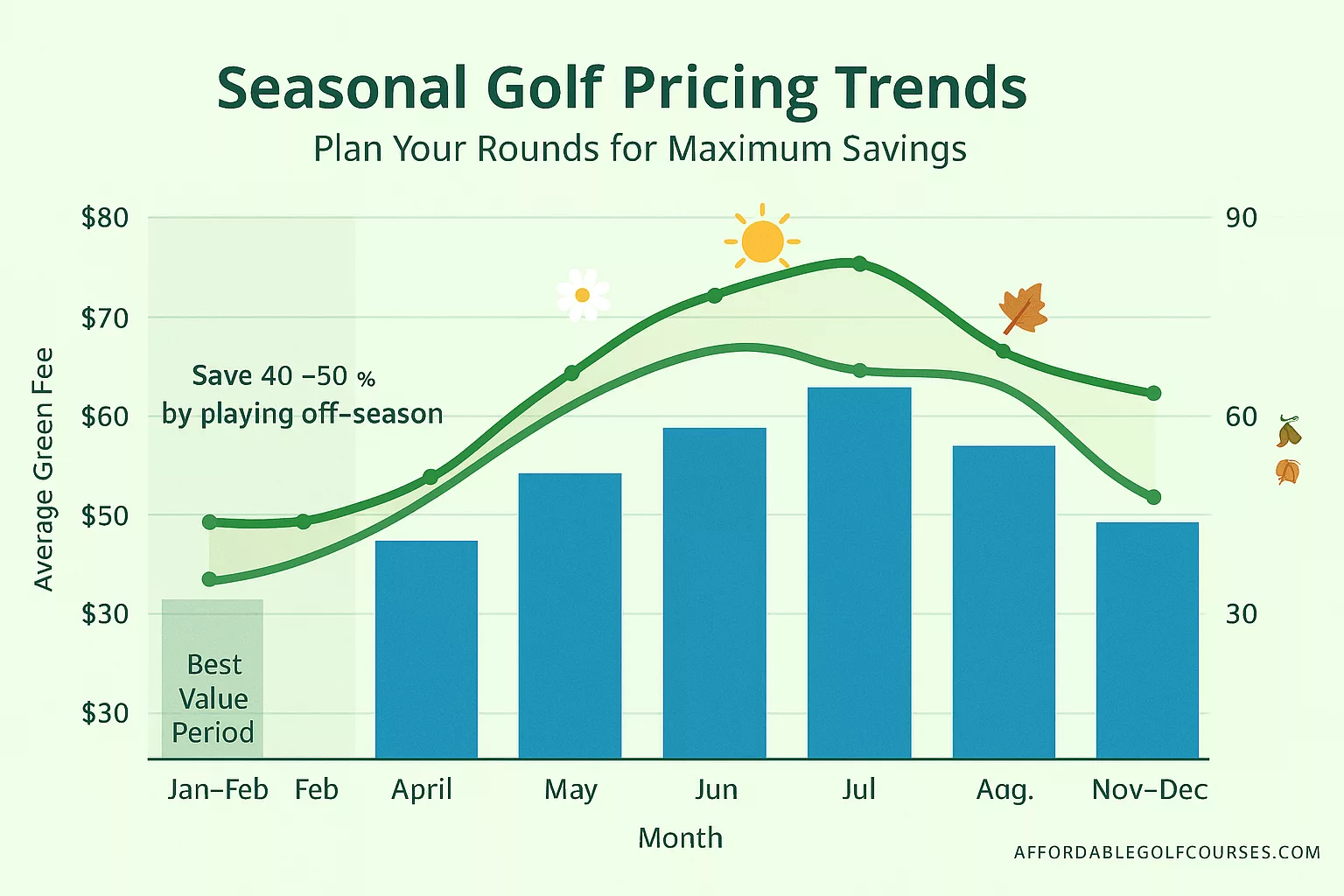
Plan your golf calendar around seasonal pricing patterns:
Spring (March-May):
- Book early for better rates
- Avoid peak weekend times
- Consider aeration schedules
Summer (June-August):
- Early morning and late afternoon for better pricing
- Weekday rounds offer significant savings
- Heat can reduce demand and prices
Fall (September-November):
- Prime conditions often at reduced rates
- Courses eager to maintain revenue before winter
- Excellent value for money period
Winter (December-February):
- Warm climate destinations offer off-season rates
- Indoor facilities and simulators for skill maintenance
- Equipment deals and planning for next season
Strategy #4: Food, Beverage, and Incidental Cost Control (Save $200-$400)
Pre-Round Preparation
Course food and beverages carry 200-300% markups. Simple preparation saves substantially:
- Bring water and snacks: Save $15-$25 per round
- Eat before arriving: Avoid overpriced clubhouse meals
- Pack energy bars: Maintain performance without vending machine costs
Strategic On-Course Purchases
When you do buy on-course:
- Happy hour pricing: Many courses offer reduced beverage prices
- Package deals: Food and beverage combos often provide better value
- Loyalty programs: Accumulate points for future savings
Strategy #5: Travel and Golf Trip Optimization (Save $400-$800)
Group Travel Advantages
Organize group trips for significant per-person savings:
- Accommodation sharing: Split costs 4-6 ways
- Group rates: Courses offer discounts for 12+ players
- Transportation efficiency: Shared rental cars and gas costs
- Package negotiation: Better deals when booking multiple rounds
Off-Peak Destination Strategy
Choose destinations and timing strategically:
Shoulder Season Benefits:
- 30-50% lower accommodation costs
- Reduced green fees at resort courses
- Less crowded conditions
- Better service and attention
Alternative Destinations:
- Emerging golf destinations offer excellent value
- Drive-to locations eliminate airfare costs
- Regional gems often provide better value than famous courses
Strategy #6: Skill Development on a Budget (Save $300-$500)
Group Lessons vs. Private Instruction
Group lessons offer 60-70% savings while providing:
- Peer learning opportunities: Learn from others’ mistakes
- Reduced pressure: More relaxed learning environment
- Social aspects: Build golf relationships
- Consistent instruction: Same instructor, lower cost
Alternative Learning Methods
Supplement traditional lessons with cost-effective options:
Online Resources:
- YouTube instruction: Free, high-quality content from PGA professionals
- Golf apps: Swing analysis and improvement tracking
- Online courses: Comprehensive programs at fraction of lesson costs
Practice Efficiency:
- Range practice with purpose: Structured practice sessions
- Short game focus: 70% of improvement comes from 100 yards and in
- Home practice: Putting mats and nets for daily improvement
Strategy #7: Membership and Loyalty Program Optimization (Save $300-$600)
Evaluate Membership Value Proposition
Calculate your break-even point for various membership options:
Full Membership Analysis:
- Divide annual fee by rounds played
- Compare to average daily-fee costs
- Factor in additional benefits (dining, events, guest privileges)
Alternative Membership Options:
- Playing memberships: Golf-only privileges at reduced cost
- Weekday memberships: Significant savings for flexible schedules
- Social memberships: Access to facilities without full golf privileges
- Junior/Senior memberships: Age-based discounts where applicable
Multi-Course Loyalty Programs
Many regions offer multi-course programs providing:
- Discounted rounds at participating courses
- Priority booking during peak times
- Reciprocal privileges when traveling
- Additional perks like free range balls or cart fees
Strategy #8: Technology and Tools for Ongoing Savings (Save $200-$400)
Golf Deal Apps and Websites
Leverage technology for real-time savings:
Essential Apps:
- GolfNow: Last-minute deals and hot deals
- TeeOff: Advance booking discounts
- Supreme Golf: Premium course access at reduced rates
- Golf Genius: Local course promotions and events
Price Tracking and Alerts
Set up automated alerts for:
- Course rate drops: Get notified when prices decrease
- Equipment sales: Track desired items for price reductions
- Travel packages: Monitor golf destination deals
- Tee time availability: Last-minute premium time openings
Advanced Money-Saving Strategies
Course Relationship Building
Develop relationships with course staff for insider benefits:
- Pro shop connections: Early notice of sales and deals
- Superintendent relationships: Best playing condition information
- Starter friendships: Potential upgrades and better tee times
- Food service relationships: Special offers and priority service
Barter and Trade Opportunities
Consider non-monetary exchanges:
- Skills trading: Web design, accounting, or other services for golf privileges
- Volunteer opportunities: Tournament help for playing privileges
- Referral programs: Bring new players for rewards and discounts
- Corporate partnerships: Leverage business relationships for golf benefits
Seasonal Budget Planning Template
Annual Golf Budget Worksheet
Fixed Costs (Annual):
- Equipment replacement/upgrades: $____
- Lessons and instruction: $____
- Membership fees: $____
Variable Costs (Monthly):
- Green fees: $____
- Cart fees: $____
- Food and beverages: $____
- Travel and accommodation: $____
Target Savings Goals:
- Monthly savings target: $____
- Annual savings goal: $____
- Reinvestment in golf improvement: $____
The Compound Effect of Smart Golf Spending
Year 1: Foundation Building
- Establish relationships with affordable courses
- Build equipment collection strategically
- Develop practice routine and skill base
- Expected savings: $1,500-$2,200
Year 2: Optimization Phase
- Leverage established relationships
- Refine equipment choices based on game development
- Access better courses through improved connections
- Expected savings: $2,000-$2,800
Year 3+: Mastery and Enjoyment
- Maximize enjoyment within established budget
- Help others save money for reciprocal benefits
- Consider strategic upgrades and experiences
- Expected savings: $2,500-$3,500 annually
Common Budget-Busting Mistakes to Avoid
Equipment Overbuying
- Mistake: Buying latest technology annually
- Solution: Focus on clubs that match your skill level and game frequency
Premium Course Addiction
- Mistake: Playing expensive courses for status
- Solution: Save premium experiences for special occasions
Inefficient Practice
- Mistake: Expensive lessons without practice follow-through
- Solution: Structured practice plans to maximize lesson investment
Travel Overspending
- Mistake: Luxury accommodations for golf-focused trips
- Solution: Prioritize golf budget over accommodation luxury
Measuring Your Success
Monthly Expense Tracking
Monitor these key metrics:
- Cost per round: Track average round expense
- Equipment ROI: Measure improvement vs. investment
- Course satisfaction: Rate enjoyment vs. cost
- Overall budget adherence: Stay within planned spending
Annual Budget Review
Conduct yearly assessments:
- Total savings achieved: Compare to baseline year
- Game improvement correlation: Link spending to skill development
- Satisfaction levels: Ensure savings don’t compromise enjoyment
- Goal adjustment: Refine targets based on results
Conclusion: Your Path to $2,000+ Annual Savings
Implementing these strategies systematically can easily save you $2,000-$3,500 annually while maintaining or improving your golf experience. The key is viewing golf expenses as investments in enjoyment and skill development rather than necessary costs.
Start with these immediate actions:
- Audit your current spending using the worksheet provided
- Identify your top 3 expense categories for initial focus
- Research affordable courses in your area using online tools
- Set monthly savings targets and track progress
- Build relationships with local golf facilities and staff
Remember: The goal isn’t to eliminate golf expenses but to optimize them for maximum enjoyment and value. Smart golfers understand that the best round isn’t always the most expensive one—it’s the one that provides the perfect combination of challenge, conditions, and cost-effectiveness.
Your golf budget should enhance your passion for the game, not limit it. With these strategies, you’ll find yourself playing more golf, enjoying better experiences, and keeping significantly more money in your pocket.
Want to discover the best affordable golf courses in your area? Visit our comprehensive course directory and start saving immediately while playing great golf.
Related Post
Best Golf Balls for Wisconsin Public Course Players (2025 Performance Guide)
Losing golf balls is part of the game, especially when you’re learning on Wisconsin’s challenging [...]
Golf Equipment on a Budget: 2025 Buying Guide Under $900
Build a complete, competitive golf bag without breaking the bank Bottom Line Up Front: You [...]