This website uses cookies to improve your experience. We\'ll assume you\'re ok with this, but you can opt-out if you wish. Read More
Erin Hills Golf Course Guide to Championship-Level Play and Amenities
Categories :
Erin Hills Golf Course Guide to Championship-Level Play and Amenities
Erin Hills Golf Course is a top destination for golfers who want to play on a championship-level course in Wisconsin. Located in the small town of Erin, just northwest of Milwaukee, this golf course has gained national recognition for both its scenic beauty and challenging layout.
Golfers from all over come here for the rolling hills, wide fairways, and natural landscapes you just don’t see every day.

The course opened in 2006 and has already hosted major tournaments like the U.S. Open. Designers crafted each hole to offer a unique challenge, so every round feels different.
If you’re thinking about a golf trip, Erin Hills offers great facilities and a super convenient location. For a deeper dive into the course’s history and details, check out the official Erin Hills website.
Key Takeaways
- Erin Hills offers a championship golf experience in Wisconsin.
- The course is known for its design and history of hosting major tournaments.
- You can expect top facilities and unique natural scenery.
History and Origins
Erin Hills is a modern golf course that quickly gained national attention. The rolling land, famous for its natural beauty, drew designers and tournament planners from the start.
Founding and Early Years
Erin Hills sits in the Kettle Moraine area of Wisconsin. Before golf, glaciers shaped this land, leaving behind all those wild hills and valleys.
In the early 2000s, Bob Lang, a Milwaukee businessman, bought the 652-acre property. He dreamed of building a championship-level golf course here.
The course officially opened to the public in 2006. Just a few years later, Erin Hills landed the chance to host major tournaments, putting this quiet spot northwest of Milwaukee on the map.
The natural landscape gave the course its challenge and beauty. From the very beginning, the team aimed to create a course good enough for the U.S. Open.
Notable Architects and Influences
Three main architects left their mark on Erin Hills: Michael Hurdzan, Dana Fry, and Ron Whitten. Each brought something different to the table.
Hurdzan and Fry focused on environmentally friendly design. Whitten, a golf writer and architecture buff, added creative flair.
They all wanted to preserve the land’s character. Instead of bulldozing, they let the hills, ridges, and streams guide the course layout.
The design avoided heavy tree planting, so the course feels open and windy, with a real links vibe. Erin Hills stands out because of these choices. If you want to read more about the architects, check out the USGA’s inside story.
Course Development Milestones
Hosting the 2017 U.S. Open was Erin Hills’ biggest milestone. This marked the first time a Wisconsin course got the honor.
Even before that, the course turned heads right after opening. Ownership changed a few times, moving from single ownership to broader investment.
The team kept the course up to USGA standards, tweaking length, greens, and bunkers as needed. For the U.S. Open, they stretched the yardage to over 7,700 yards, but most days it’s much more playable for regular folks.
For more on the course’s growth and milestones, visit the Erin Hills official site.
Course Layout and Design

Erin Hills Golf Course features wide fairways, natural hilly landscapes, and a layout shaped by ancient glaciers and kettle moraine terrain. The course is famous for its challenging play and scenic holes.
Signature Holes
Several holes at Erin Hills really stand out, both for their challenge and their looks. The par-5 18th hole is legendary—a long fairway, bunkers on both sides, and a green watched over by the clubhouse.
The par-3 ninth hole is another highlight, set against rolling hills. You hit downhill to a big, undulating green, so picking the right club is crucial.
The par-4 second hole has natural mounds and deep rough. And then there’s the “Kettle Loop,” a set of holes shaped by glacial dips, adding both beauty and challenge.
You can check out detailed maps and yardages for each hole on the Erin Hills course map.
The 18 Holes Experience
Playing all 18 holes at Erin Hills is a real adventure. The course stretches over 7,700 yards from the back tees, which is plenty for championship play.
But with multiple tee boxes, you can pick the challenge that fits your game. No two holes feel the same—one minute you’re in open prairie, the next you’re moving through shaded valleys shaped by glaciers.
The routing avoids parallel holes, so you won’t feel crowded. Fairways are wide, but you’ve got to place your shots well because of bunkers and fescue grasses.
Greens are big, with slopes and tiers that reward smart approach shots. For a hole-by-hole guide and interactive maps, check out the Erin Hills layout.
Unique Land Features
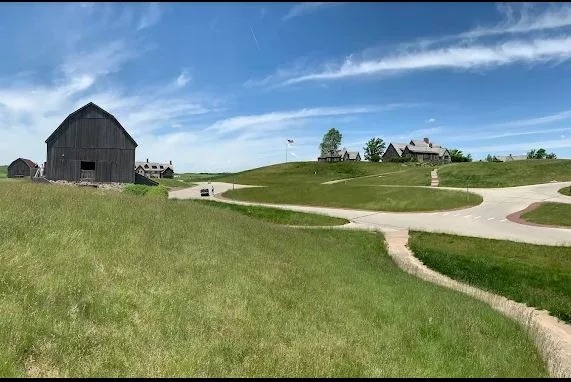
Erin Hills sits in Wisconsin’s kettle moraine, a landscape carved by Ice Age glaciers. The rolling hills, kettles, and ridges shape the course and your game.
Fairways bend around these features, so you get different lies and stances on almost every shot. Wetlands and small rivers run along the course, adding both beauty and extra hazards.
Sandy soil and patches of glacial stones keep the ground firm and fast. The architects routed the holes to follow the land’s natural flow, so the course feels like it belongs here.
Erin Hills really uses its kettle moraine setting to full effect. You can see how the land shapes each hole with aerial views on the interactive course map.
Major Championships Hosted

Erin Hills has hosted several big-time tournaments. These events bring top talent to Wisconsin and show off the course’s role in major amateur and pro championships.
2017 U.S. Open
The 2017 U.S. Open really put Erin Hills on the world stage. It was the first time the course hosted a men’s major, and honestly, it made history in Wisconsin.
Brooks Koepka won with an incredible score of 16-under-par, setting a new scoring record for relation to par at the U.S. Open. The course’s wide fairways and deep rough made things tough but fair for everyone.
Fans and players loved Erin Hills’ unique design and scenery, and thousands came to watch each day. You can find more about the 2017 U.S. Open at Erin Hills.
U.S. Amateur Events
Erin Hills has hosted some important amateur tournaments, like the U.S. Amateur, U.S. Mid-Amateur, and U.S. Women’s Amateur Public Links. These events give the course a chance to test rising stars and skilled amateurs in tough conditions.
The 2011 U.S. Amateur was a standout, with future pros battling for the top prize. The course’s length, winds, and fescue grass demanded smart strategy and accuracy.
Later, the U.S. Mid-Amateur and Women’s Amateur Public Links came to Erin Hills too. The course has become a regular stop for aspiring champions.
U.S. Women’s Open
Erin Hills keeps landing major championships in women’s golf. It’s set to host the U.S. Women’s Open, which draws the world’s best female players.
Players like Maja Stark and other top contenders will face rolling fairways and fast greens. The event is known for its tough conditions, and Erin Hills’ design will force precise play and smart course management.
The U.S. Women’s Open adds to Erin Hills’ tradition of hosting iconic golf championships and brings plenty of attention from fans and media. To see more about women’s championships at Erin Hills, visit this page.
Upcoming 2025 U.S. Women’s Open Championship
The 2025 U.S. Women’s Open lands at Erin Hills from May 29 to June 1. This is shaping up to be one of Wisconsin’s biggest sporting events next year.
Thousands of fans will turn out to watch the best professional and amateur women golfers chase the historic title. The tournament really puts every part of a player’s game to the test.
Bunkers, native grasses, and that unpredictable Wisconsin weather—these will all play a part. Erin Hills has already started prepping the course, aiming for top-notch playing conditions.
Hosting the 2025 U.S. Women’s Open Championship just adds to Erin Hills’ reputation as a major venue for both men’s and women’s golf.

Playing At Erin Hills
Erin Hills is a walking-only course, sticking to tradition and offering world-class service. Fees, caddies, and etiquette all shape how your day unfolds here.
Green Fees and Booking
If you want to play Erin Hills in 2025, expect a green fee of $375 during the regular season. Sometimes, you’ll find discounts for replay or afternoon rounds—worth checking if you’re planning a long day.
You’ll definitely need to book ahead, especially during peak months or on weekends. The official site is your best bet for reservations.
Packages with on-site lodging can make things easier and sometimes add value. If you have accessibility needs, you can request a golf cart by applying two weeks before your tee time.
Normally, everyone walks, keeping with the course’s old-school vibe. For the latest rates and policies, check the Erin Hills green fees page.
Caddie Experience and Guidelines
At Erin Hills, you’ll usually play with a professional caddie who carries your bag and offers advice. These caddies know the layout inside and out, helping you make smart decisions.
It’s not required to have a caddie, but it’s highly recommended if you want the full experience. Caddie services include reading greens, suggesting clubs, and talking strategy—plus, they’ll help you keep pace and track down any wayward shots.
- Reading greens and offering club suggestions
- Advice on course strategy and wind direction
- Locating balls and keeping up the pace
You’ll walk, and your caddie will handle the clubs and keep track of your shots. Erin Hills suggests one caddie per player, but sometimes they’ll double up if you arrange it in advance.
Suggested Gratuity Etiquette
Tipping your caddie is just part of the Erin Hills experience. The usual gratuity for a professional caddie is $60–$80 per player for 18 holes.
If you book a forecaddie, plan to tip $30–$40 per person. Hand your tip directly to your caddie at the end of your round.
If you play another round or your caddie goes above and beyond, consider tipping a bit extra. Cash is best and makes sure your caddie gets their tip right away, though most payment forms are accepted.
Visiting Erin Hills
Planning a trip to Erin Hills? You’ll find quality lodging, good dining, and overnight packages to keep things comfortable. The on-site amenities let you enjoy championship golf and thoughtful accommodations.
Lodging Options
Erin Hills has several lodging choices, depending on what you’re after. The cottages are great for groups or anyone wanting privacy, with nice views and cozy furnishings.
For a more classic stay, the main lodge has rooms with modern touches and simple décor. It’s a peaceful spot—perfect for unwinding after a day on the course.
Rooms have Wi-Fi, comfy beds, and basics like toiletries. Since Erin Hills is tucked away from city noise, the vibe is quiet and restful. More info on accommodations is on the Erin Hills official site.
Dining Experiences
Dining here ranges from casual to upscale. The main dining room serves up a varied menu, with plenty of regional and seasonal options.
Breakfast, lunch, and dinner are all available, so you don’t need to leave the property. The pub is a favorite hangout—sandwiches, appetizers, and drinks in a laid-back setting.
After your round, you can relax with a meal and a view of the course or swap stories with your group. Sometimes, they host special dinners or tasting events if you’re after something unique.
The staff is friendly and accommodating, which honestly makes a difference. You’ll find more about dining on the Travel Wisconsin page.
Overnight Stay Packages
Erin Hills offers overnight packages that bundle golf, dining, and lodging. These often include special room rates, course access, and meal credits or set menus.
You can stay in a cottage or a lodge room and snag an early tee time. Most packages work best if you’re planning to spend at least a full day at the resort.
Some packages throw in extras like welcome gifts or priority access to special events. Book early—these deals go fast, especially around tournaments or in peak season. The Erin Hills website lists the latest offers and availability.
Practice Facilities and Amenities
There’s a solid range of practice areas and guest perks to make your golf day better. These help you get ready for your round and enjoy your visit, whether you’re on the course or just hanging out.
Practice Greens and Ranges
Erin Hills has some impressive practice facilities for all skill levels. The driving range is big and well-kept, with modern hitting bays and clear yardage markers.
You can warm up your long game before you head out. The Championship Practice Facility includes Toptracer Range tech, and there are short game areas for chipping and sand play.
There’s also a big grass putting green by the first tee. The Drumlin putting course stays open into the evening with lights, so you can practice late if you want. Details are on the Erin Hills amenities page.
Guest Services
Erin Hills tries to go above the basics for guests. The Golf Shop is stocked with apparel, equipment, and accessories, so you can grab whatever you need.
On-site lodging includes the Lodge and four-bedroom cottages, so you can stay close to the action. Fire pits are set up for relaxing after a long day.
Dining options run from casual to fine dining, so there’s something for everyone. Locker rooms are spacious, and the staff is attentive—little things that make your visit more comfortable. Find more guest service details at Erin Hills.
Strategic Location and Accessibility
Erin Hills sits in the heart of Wisconsin, surrounded by rolling landscapes and easy to reach by car. You’ll find clear travel options and helpful transportation info, especially if you’re coming from the Milwaukee area.
Access from Milwaukee
Erin Hills is about 35 miles northwest of downtown Milwaukee. The drive usually takes around 50 minutes, traffic depending.
Most folks take Interstate 94 west, then hop onto Highway 83 north, finishing up on local county roads. If you’re flying in, Milwaukee Mitchell International Airport is the closest major airport.
Once you land, you can rent a car or set up private transportation for a direct drive. There’s no public transit straight to Erin Hills, so you’ll need to drive.
Along the way, you’ll find gas stations, restaurants, and convenience stores if you want to stop. Erin Hills is in a pretty rural spot, so plan your route and fuel stops ahead of time. Here are more details on location.
Directions and Transportation
For directions, punch in 7169 County Road O, Erin, WI 53027. Using GPS navigation is a good idea, especially if you don’t know the area.
Signage will help guide you in the last few miles, especially when big events are happening. On tournament days, traffic can get heavy, so show up early to grab parking.
The course is walking-only, so parking lots aren’t always right by the entrance. If you’re staying at The Lodge, they sometimes offer shuttle service for guests.
Uber and Lyft aren’t really available out here, so plan your rides. More info about the course layout and amenities is on Erin Hills information.
Environmental Stewardship
Erin Hills stands out for its commitment to eco-friendly practices. The course works to protect local habitats and uses design choices that help both the environment and the golfers.
Sustainable Design
The layout at Erin Hills was crafted to keep the land as untouched as possible. They shaped only what was needed for play and left the rest alone.
Native grasses don’t need much irrigation, which cuts down on water use. These grasses also support pollinators and local wildlife, so it’s a win-win.
Erin Hills holds Certified Audubon Cooperative Sanctuary status, which recognizes golf courses for wildlife management, chemical reduction, and water conservation. Their focus on sustainability has even earned them a nod from environmental groups.
If you want to dig deeper into these efforts, check out this summary of Erin Hills’ sustainable design.
Preservation of Natural Features
The course sits on land shaped by ancient glaciers. That means you’ll see rolling hills and some pretty unique features as you play.
They left most of the trees alone, so you get more open prairie and big views. Wetlands and native ecosystems stayed protected during construction.
When you visit, you’re actually supporting a team that works every day to preserve the natural landscape and maintain wildlife habitats. You’ll get to experience the land’s original glacial features and open spaces, almost like stepping back in time. If you want more on these preservation efforts, check out Erin Hills Golf Course.
Events and Tournaments
Erin Hills hosts major championships recognized by the United States Golf Association. You’ll also find annual amateur events and unique experiences for corporate and private groups.
Annual Amateur Events
Erin Hills is known for hosting some of the most important golf championships in the country. In 2025, the course will host the U.S. Women’s Open, one of the five LPGA majors. The U.S. Amateur has also been played here, making Erin Hills one of only sixteen courses nationwide to host both events.
Looking ahead, the schedule includes the U.S. Amateur Four-Ball in 2027, the U.S. Women’s Amateur Four-Ball in 2030, the U.S. Women’s Amateur in 2033, and the U.S. Junior Amateur in 2039. That’s a pretty wide range of events, and it really shows how challenging and respected this course is.
Corporate and Private Tournaments
You can set up a corporate or private tournament at Erin Hills, with help from an experienced staff. Events can offer custom tournament formats, group instruction, and full access to the facilities.
Erin Hills has spacious meeting areas and offers catering, so your group stays comfortable all day. Many companies come back each year for team-building or client events because the service is top-notch and the course is memorable.
Tournament packages can include breakfast, lunch, or dinner, plus awards presentations. The setting is scenic and tough—a pretty unique place for your next outing. For details or reservations, here’s their official page.
Recognition and Media Spotlight
Erin Hills Golf Course gets a lot of respect in the golf world and in the media. The course stands out for national awards and for the quirky “24 Hours at Erin Hills” challenge, which has turned some heads.
Awards and Rankings
Erin Hills has picked up some big honors, ranking among the top public golf courses in the country. Golf Digest put Erin Hills at 10th greatest public course in America and 48th among the top 100 courses overall.
The course is famous for its challenging layout and beautiful scenery. You’ll find a range of tee options, stretching up to 7,715 yards from the Black tees. Erin Hills holds a high rating and slope, so it’s not for the faint of heart. More on the rankings and yardage is in the Erin Hills fact sheet.
Hosting the 2017 U.S. Open brought a ton of media attention and really cemented Erin Hills as a top golf destination.
“24 Hours at Erin Hills”
The “24 Hours at Erin Hills” challenge is a wild way to experience the course. You and your group try to play as many holes as you can in one day, usually from sunrise to sunset.
Participants get special gear and a few extra perks, which makes it even more fun. Golf media has covered the event, adding to Erin Hills’ reputation as more than just a championship spot.
Stories and highlights from “24 Hours at Erin Hills” really show off the dedication of the golfers who take part. If you want more info about this or other events, check the Erin Hills official site.
Frequently Asked Questions
Erin Hills is famous for its championship-level golf and unique terrain. You’ll find practical info on fees, lodging, maps, location, jobs, and even a popular extra loop of holes.
What are the current rates for playing a round at Erin Hills?
Rates at Erin Hills change depending on the season and the day of the week. Fees usually include greens fees and sometimes a caddie fee. For the latest prices, check their official website or just call their reservations line.
What accommodations are available near Erin Hills Golf Course?
You’ve got a few options for lodging, both at the course and nearby. Erin Hills has on-site lodging if you want to stay overnight, or you can find hotels and inns in the surrounding towns if you’d rather stay off property.
Can I see a course map of Erin Hills before playing?
Yep, you can check out the course layout before your round. The Erin Hills website usually has a detailed hole-by-hole course map so you can get familiar with the terrain ahead of time.
What is the distance between Erin Hills and Milwaukee?
Erin Hills sits about 35 miles northwest of Milwaukee. Most days, you can make the drive in under an hour, unless traffic gets weird.
What job opportunities are available at Erin Hills Golf Course?
Erin Hills hires for seasonal and full-time roles, including grounds crew, hospitality, food service, and caddie jobs. They also offer volunteer spots during major events. For the latest openings, check the official FAQ or the careers section on their website.
What is the Kettle Loop at Erin Hills?
The Kettle Loop is an extra stretch of golf holes, set apart from the main 18-hole course. It gives golfers a chance to play more holes with some pretty unique views.
You’ll find new challenges out here, so it’s not just more of the same. Honestly, it’s a fun way to squeeze a little extra out of your round.
Related Post

Top-Rated Public Golf Courses in Rock County, Wisconsin: Best Greens to Play in 2025
Top-Rated Public Golf Courses in Rock County, Wisconsin: Best Greens to Play in 2025 Rock [...]
Affordable Public Golf Courses in Racine County Wisconsin
Affordable Public Golf Courses in Racine County Wisconsin: Top Budget-Friendly Options for Golfers Racine County [...]