This website uses cookies to improve your experience. We\'ll assume you\'re ok with this, but you can opt-out if you wish. Read More
Golf Course Membership vs. Daily Fees: Cost Analysis
Make the right financial decision for your golf game and wallet
Bottom Line Up Front: The membership vs. daily fee decision depends on three critical factors: rounds played per year, course access preferences, and total lifestyle value. Most golfers break even at 25-35 rounds annually, but the real value often lies in non-golf benefits that can justify membership even for occasional players.
The Real Cost of Playing Golf: Beyond Green Fees
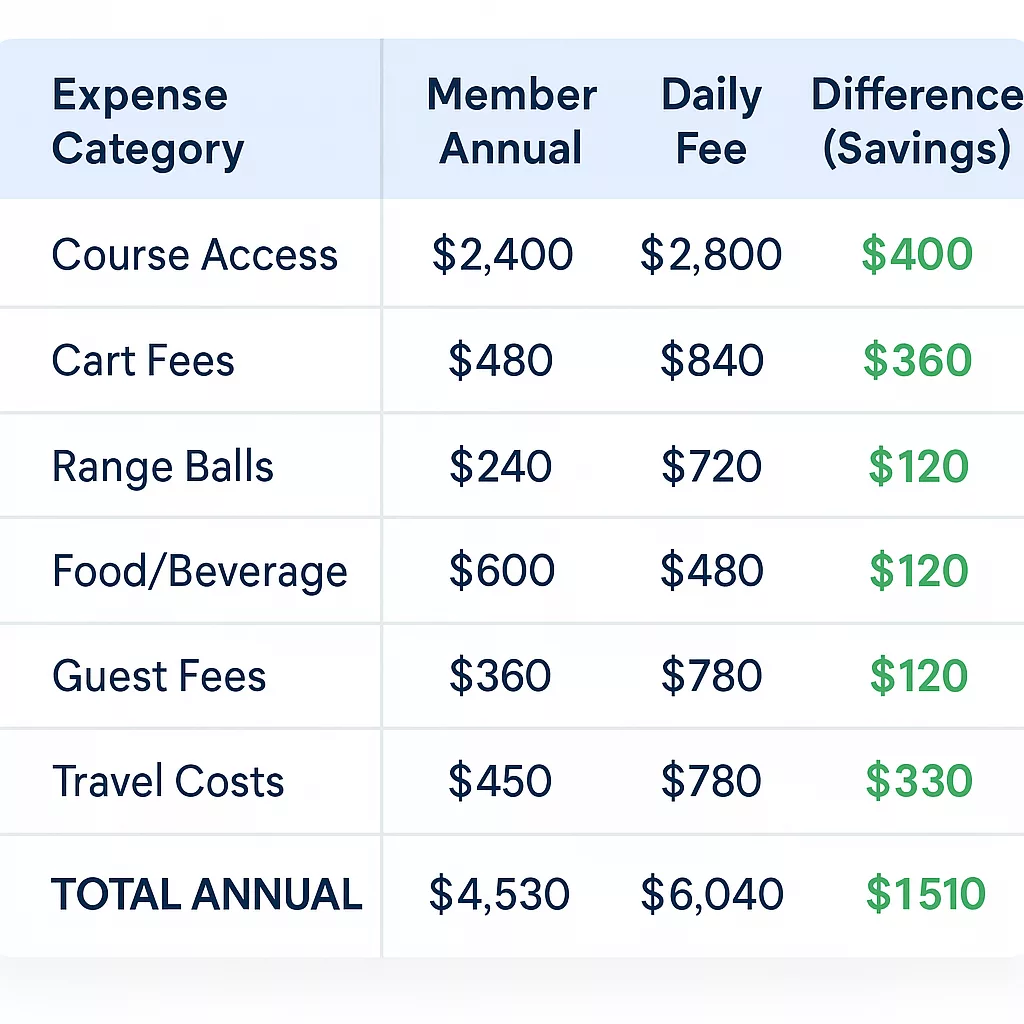
Most golfers focus solely on comparing membership dues to daily green fees, missing 40-60% of their actual golf spending. A comprehensive cost analysis reveals hidden expenses and unexpected value sources that dramatically affect the membership equation.
Total Golf Spending Categories
Direct Course Costs:
- Green fees or membership dues
- Cart fees and range balls
- Food and beverage purchases
- Pro shop merchandise
Indirect Golf Expenses:
- Travel time and fuel costs
- Equipment wear and storage
- Guest fees and reciprocal charges
- Tournament and event participation
Understanding Membership Types and Structures
Full Golf Membership
Typical Annual Cost: $2,000-$8,000 Access Level: Unlimited golf privileges Additional Benefits: Dining, social events, reciprocal play
Ideal For:
- Players who golf 30+ rounds annually
- Those seeking social community and networking
- Golfers prioritizing consistent course conditions
- Business professionals using golf for client entertainment
Limited Golf Membership
Typical Annual Cost: $1,200-$4,000 Access Level: Restricted days/times (weekdays only, off-peak hours) Additional Benefits: Reduced dining privileges, some social events
Perfect For:
- Retirees with flexible schedules
- Players who prefer less crowded conditions
- Budget-conscious golfers who play 20-35 rounds yearly
- Those seeking membership benefits at lower cost
Social Membership
Typical Annual Cost: $600-$2,400
Access Level: Dining and social privileges, limited or no golf Additional Benefits: Pool, tennis, event access
Best Suited For:
- Families prioritizing overall club lifestyle
- Business networking without heavy golf focus
- Players who golf occasionally but value amenities
- Those seeking affordable club access for dining and events
Corporate Membership
Typical Annual Cost: $3,000-$15,000 Access Level: Multi-employee access, guest privileges Additional Benefits: Business entertainment facilities, event hosting
Optimal For:
- Companies using golf for client relations
- Businesses seeking employee benefits
- Organizations hosting corporate events
- Professional service firms building relationships
Daily Fee Golf: The Pay-As-You-Play Model
Public Golf Courses
Average Cost: $35-$85 per round Advantages: No commitment, course variety, flexible spending Considerations: Peak time availability, inconsistent conditions
Resort Golf Courses
Average Cost: $75-$300 per round Advantages: Premium conditions, vacation golf experiences Considerations: High per-round costs, limited local options
Municipal Golf Courses
Average Cost: $25-$55 per round Advantages: Affordable rates, consistent availability Considerations: Higher demand, potentially slower play
Private Course Guest Fees
Average Cost: $50-$150 per round (with member) Advantages: Exclusive course access, premium conditions Considerations: Requires member relationships, limited availability
Break-Even Analysis: Finding Your Golf Economics Sweet Spot
The Basic Mathematics
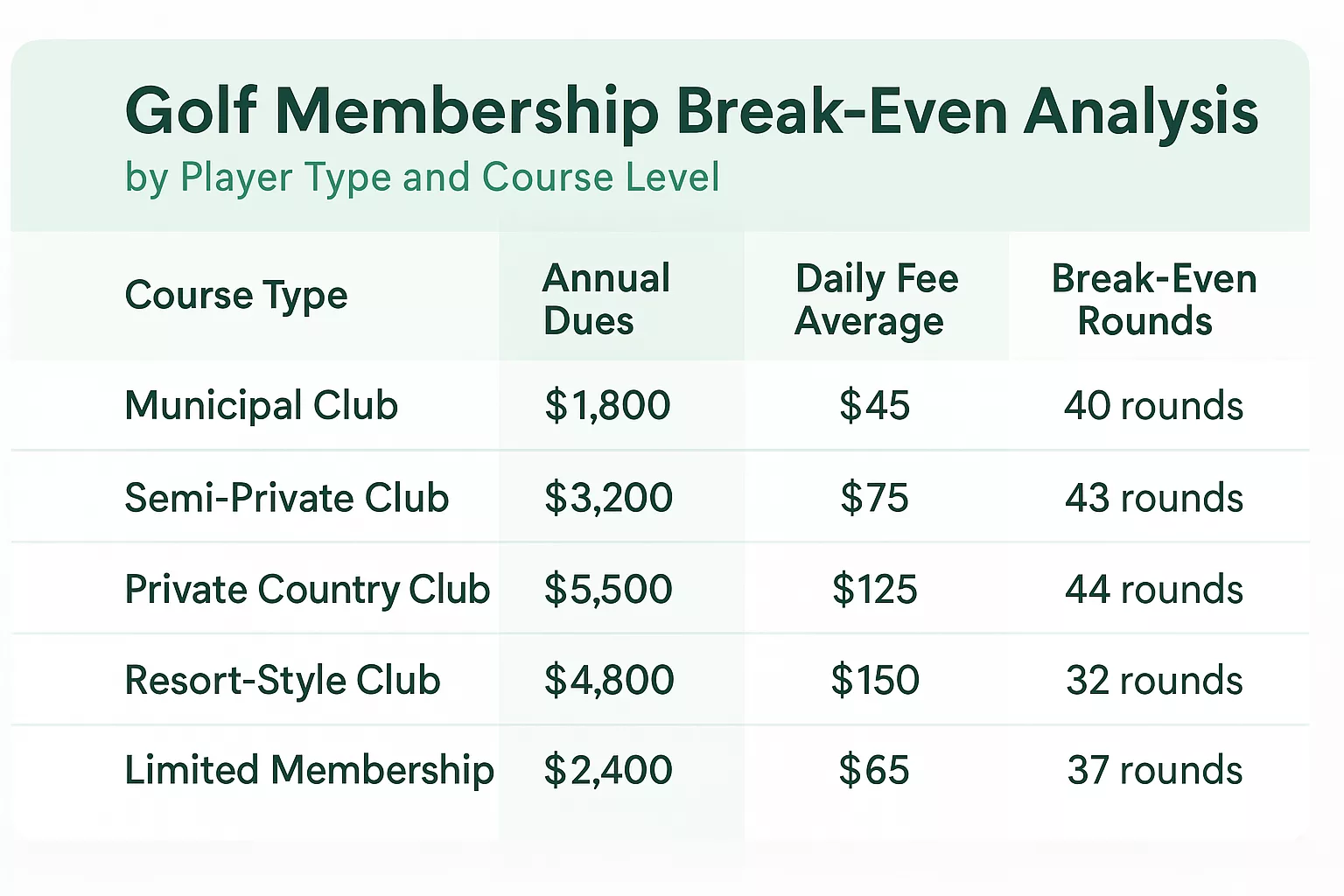
Standard Break-Even Formula: Annual Membership Cost ÷ Average Daily Fee = Break-Even Rounds
Example Calculation: $3,000 Annual Membership ÷ $75 Average Daily Fee = 40 rounds to break even
Advanced Break-Even Analysis
Total Cost Comparison Method:
- Calculate annual membership cost (dues + assessments + cart fees)
- Estimate daily fee annual cost (rounds × average fee + cart fees)
- Factor in additional benefits (dining discounts, guest privileges, etc.)
- Include hidden costs (travel, time, booking fees)
Factors That Affect Break-Even Calculations
Course-Specific Variables:
- Cart fee inclusion: Members often receive discounted or included cart fees
- Range privileges: Unlimited practice vs. per-bucket charges
- Peak time access: Guaranteed tee times vs. standby availability
- Guest privileges: Member guest rates vs. daily fee guest charges
Personal Playing Patterns:
- Seasonal consistency: Year-round vs. seasonal playing
- Time flexibility: Peak time requirements vs. off-peak availability
- Group size: Solo play vs. regular foursomes
- Travel preferences: Local course loyalty vs. course variety seeking
Hidden Costs and Unexpected Savings
Membership Hidden Costs
Initial Fees:
- Initiation fees: $500-$25,000 depending on club exclusivity
- Capital assessments: $200-$2,000 annually for course improvements
- Food minimums: $300-$1,200 quarterly spending requirements
- Cart fees: $15-$25 per round even for members
Ongoing Obligations:
- Annual dues increases: 3-7% yearly escalations
- Special assessments: Unexpected fees for major renovations
- Minimum spending: Pro shop and dining requirements
- Guest fees: $25-$75 per guest round
Daily Fee Hidden Costs
Booking and Access:
- Premium booking fees: $5-15 for prime tee times
- Weekend supplements: 25-50% upcharges for weekend play
- Holiday premiums: 50-100% increases on holidays
- Cancellation penalties: $10-25 for last-minute changes
Travel and Time:
- Fuel costs: $8-20 per round depending on distance
- Parking fees: $5-15 at premium facilities
- Time investment: 30-90 minutes additional travel time
- Booking effort: Time spent researching and securing tee times
Membership Unexpected Savings
Dining and Social Benefits:
- Restaurant discounts: 10-20% off dining for members
- Event pricing: Reduced rates for social and business events
- Reciprocal privileges: Access to other clubs while traveling
- Guest entertainment: Professional hosting capabilities
Golf-Related Savings:
- Pro shop discounts: 10-15% off equipment and apparel
- Lesson packages: Reduced instruction rates
- Tournament entries: Lower fees for club competitions
- Storage benefits: Club cleaning and storage services
Lifestyle and Intangible Value Analysis
Community and Social Value
Networking Opportunities: Professional relationships formed through golf often provide business value exceeding membership costs. A single business deal facilitated through club connections can justify years of membership dues.
Family Benefits: Many clubs offer pools, tennis, dining, and social events that provide value beyond golf. Families often find the per-person cost of club amenities competitive with standalone facilities.
Consistency and Convenience: Members enjoy guaranteed tee times, consistent course conditions, and familiar staff relationships that enhance the overall golf experience beyond pure economics.
Time Value Considerations
Scheduling Efficiency: Members typically book tee times weeks in advance and rarely face availability issues, saving hours of planning and backup arrangements.
Travel Time Reduction: Playing a consistent home course eliminates drive time to multiple facilities and reduces the stress of navigating unfamiliar areas.
Relationship Building: Regular play with the same group of members develops lasting friendships and deepens the social enjoyment of golf.
Course Quality and Maintenance Standards
Membership Course Advantages
Consistent Conditioning: Private clubs typically maintain higher and more consistent course conditions due to dedicated maintenance budgets and limited play volume.
Exclusive Access: Members enjoy uncrowded conditions, especially during peak times when public courses face heavy traffic and slower play.
Amenities Quality: Private club facilities often feature superior practice areas, locker rooms, dining facilities, and overall infrastructure.
Daily Fee Course Benefits
Variety and Exploration: Daily fee players experience diverse course designs, challenge levels, and geographic locations, enhancing their overall golf education.
No Pressure Commitment: Freedom to adjust golf spending based on life circumstances without ongoing financial obligations.
Access to Premium Facilities: Occasional play at high-end resort courses provides luxury experiences without annual membership costs.
Geographic and Seasonal Considerations
Regional Cost Variations
Northeastern United States:
- Membership Range: $3,000-$12,000 annually
- Daily Fee Range: $60-$200 per round
- Season Impact: 6-7 month playing season affects value calculations
Southeastern United States:
- Membership Range: $2,000-$8,000 annually
- Daily Fee Range: $45-$150 per round
- Season Impact: Year-round play maximizes membership value
Western United States:
- Membership Range: $2,500-$15,000 annually
- Daily Fee Range: $75-$300 per round
- Season Impact: Extended seasons and premium course access
Midwest United States:
- Membership Range: $1,500-$6,000 annually
- Daily Fee Range: $35-$120 per round
- Season Impact: 5-6 month seasons require careful value analysis
Seasonal Membership Options
Summer-Only Memberships: Perfect for northern climates where winter golf is impossible. Costs typically 60-70% of full annual memberships.
Winter Memberships: Available in warm climates for seasonal residents. Usually 40-50% of annual membership costs.
Trial Memberships: Many clubs offer 30-90 day trial periods allowing golfers to experience full benefits before annual commitment.
Decision Framework: Choosing Your Optimal Path
Financial Decision Matrix
High-Frequency Players (40+ rounds annually):
- Recommendation: Full golf membership at preferred club
- Value Focus: Cost per round, course quality, convenience
- Considerations: Initiation fees, annual escalations, family usage
Medium-Frequency Players (20-39 rounds annually):
- Recommendation: Limited membership or strategic daily fee mix
- Value Focus: Flexibility, peak time access, total annual costs
- Considerations: Weekday availability, travel willingness, social benefits
Low-Frequency Players (Under 20 rounds annually):
- Recommendation: Daily fee model with occasional premium experiences
- Value Focus: Course variety, spending flexibility, no commitment
- Considerations: Special occasion access, guest privileges, future plans
Personal Lifestyle Assessment
Career Stage Considerations:
- Young Professionals: Daily fees for flexibility, networking memberships for business
- Established Careers: Full memberships for consistency and client entertainment
- Retirees: Limited memberships for value, social memberships for lifestyle
Family Situation Impact:
- Singles: Focus on golf value and social opportunities
- Young Families: Consider family amenities and long-term value
- Empty Nesters: Evaluate social aspects and guest privileges
Geographic Stability:
- Frequent Movers: Daily fee flexibility preferred
- Long-term Residents: Membership investment justified
- Uncertain Future: Trial memberships or daily fee approach
Advanced Optimization Strategies
Multi-Club Approach
Primary and Secondary Memberships: Some golfers maintain a limited membership at a high-quality club for regular play while using daily fees for variety and special occasions.
Seasonal Dual Memberships: Players in seasonal climates often hold winter memberships in warm destinations and summer memberships in home locations.
Corporate Plus Personal: Business professionals may access corporate memberships for client entertainment while maintaining personal memberships for family use.
Smart Daily Fee Strategies
Group Buying Power: Organizing regular foursomes can negotiate group rates at premium daily fee courses, achieving near-member pricing.
Loyalty Programs: Many municipal and public courses offer punch cards or season passes providing member-like benefits without long-term commitment.
Off-Peak Optimization: Strategic scheduling of rounds during off-peak times maximizes value while minimizing costs at daily fee facilities.
Technology-Enhanced Decision Making
Cost Tracking Apps: Modern apps help track actual golf spending, making membership value calculations more accurate and objective.
Tee Time Optimization: Dynamic pricing algorithms can help daily fee players identify optimal booking times for maximum value.
Course Condition Monitoring: Real-time course condition apps help optimize daily fee course selection for best value experiences.
Special Situations and Alternative Models
Corporate Golf Programs
Company Memberships: Many businesses provide golf memberships as executive benefits, completely changing individual cost calculations.
Client Entertainment Budgets: Professional service firms often budget for golf entertainment, making premium memberships business expenses rather than personal costs.
Partnership Opportunities: Some professionals share membership costs with business partners, reducing individual financial burden while maintaining access.
Emerging Membership Models
Play and Stay Packages: Some clubs offer combined golf and accommodation packages, appealing to destination golfers and occasional visitors.
Distance Learning Memberships: Remote work trends have created demand for temporary memberships allowing professionals to maintain club access while living elsewhere.
Equity vs. Non-Equity Options: Understanding the difference between equity (ownership stake) and non-equity memberships affects both costs and long-term value.
Future Trends Affecting Golf Economics
Technology Impact on Golf Costs
Dynamic Pricing Models: Both membership clubs and daily fee courses increasingly use variable pricing based on demand, weather, and course conditions.
Digital Membership Services: Apps providing access to multiple courses through single memberships are changing traditional club loyalty models.
Virtual Golf Integration: Simulator technology may reduce the need for traditional course access, affecting membership value propositions.
Demographic Shifts
Millennial Golf Preferences: Younger golfers typically prefer flexibility and variety over traditional club membership commitment.
Aging Population Trends: Growing retiree populations are driving demand for limited and social memberships with enhanced amenities.
Urbanization Effects: City-based golfers increasingly value course variety and travel experiences over single-club membership.
Economic Environment Influence
Inflation Impact on Golf: Rising costs affect both membership dues and daily fees, but membership increases are often more predictable and budgetable.
Recession-Proofing Strategies: Economic downturns typically benefit high-value memberships while premium daily fee courses suffer demand decreases.
Investment Alternative Analysis: Some view golf memberships as lifestyle investments competing with other discretionary spending categories.
Making Your Decision: Action Steps
1. Calculate Your Current Golf Spending
Track All Expenses for 12 Months:
- Green fees and cart costs
- Range balls and practice time
- Food and beverage purchases
- Travel and fuel costs
- Equipment and accessories
Analyze Playing Patterns:
- Total rounds played
- Peak vs. off-peak preferences
- Course variety vs. consistency desires
- Group play vs. solo round frequency
2. Research Local Membership Options
Visit Multiple Clubs:
- Tour facilities during different seasons
- Meet with membership directors
- Understand all fee structures and obligations
- Evaluate course conditions and amenities
Network with Current Members:
- Gain insider perspectives on club culture
- Understand hidden costs and unexpected benefits
- Learn about recent changes and future plans
- Assess long-term satisfaction levels
3. Test Before Committing
Guest Round Experiences:
- Play as a guest multiple times
- Experience different seasons and conditions
- Test peak time access and service levels
- Evaluate course difficulty and enjoyment
Trial Membership Options:
- Consider short-term trial memberships
- Participate in club events and social functions
- Use practice facilities and dining services
- Assess overall value beyond pure golf
4. Financial Planning Considerations
Budget Integration:
- Ensure membership fits comfortable within annual budget
- Plan for dues increases and special assessments
- Consider family financial goals and priorities
- Evaluate opportunity cost of membership investment
Long-term Perspective:
- Assess 5-10 year golf playing projections
- Consider career and life stage changes
- Evaluate potential relocation or lifestyle shifts
- Plan exit strategies if circumstances change
Common Decision-Making Mistakes to Avoid
Financial Miscalculations
Underestimating Total Costs: Many new members fail to account for cart fees, guest charges, food minimums, and special assessments when calculating membership value.
Overestimating Playing Frequency: Enthusiasm often leads to unrealistic projections of annual rounds played, skewing break-even calculations.
Ignoring Inflation: Membership dues typically increase 3-7% annually, significantly affecting long-term cost projections.
Lifestyle Misalignment
Club Culture Mismatch: Joining clubs where personal values and social preferences don’t align with member culture leads to dissatisfaction regardless of financial value.
Overcommitting to Golf: Some players join clubs assuming golf will become a larger part of their lives, only to discover other interests take priority.
Family Consideration Oversight: Single-focused golf decisions often ignore family preferences and needs for broader club amenities.
Timing and Strategy Errors
Peak Season Joining: Joining during busy seasons when courses are crowded and conditions stressed provides poor first impressions of membership value.
Insufficient Research: Rushing membership decisions without thorough investigation of alternatives leads to buyer’s remorse and financial loss.
Ignoring Exit Strategies: Failing to understand resignation policies, dues obligations, and equity recovery procedures creates financial risk.
Conclusion: Your Optimal Golf Investment Strategy
The membership vs. daily fee decision extends far beyond simple cost-per-round calculations. Successful golf financial planning requires honest assessment of playing frequency, lifestyle preferences, social needs, and long-term goals.
Key decision factors prioritized:
- Playing Frequency: 30+ rounds annually strongly favors membership consideration
- Consistency Preference: Desire for reliable course access and conditions supports membership
- Social Integration: Networking and community value can justify membership regardless of pure golf economics
- Financial Flexibility: Available budget for golf without compromising other life priorities
- Geographic Stability: Long-term residence in area maximizes membership investment value
Optimal strategies by player type:
Committed Golfers (35+ rounds annually): Full membership at quality club maximizes value and satisfaction
Regular Players (20-34 rounds annually): Limited membership or strategic mix of home club membership with daily fee variety
Occasional Golfers (Under 20 rounds annually): Daily fee approach with premium experiences for special occasions
Business Professionals: Membership evaluation based on client entertainment needs and networking value
Remember: The best golf financial decision aligns with your overall lifestyle goals and provides enjoyment value beyond pure economics. Whether choosing membership or daily fees, focus on maximizing golf satisfaction within your comfortable financial parameters.
Start your analysis today:
- Track current golf spending for three months
- Visit local clubs during different seasons
- Calculate realistic break-even scenarios including all costs
- Consider family and lifestyle factors beyond pure golf value
Your perfect golf financial strategy awaits discovery through careful analysis and honest self-assessment.
Ready to find your perfect golf membership or discover the best daily fee options in your area? Visit our golf course directory to explore membership opportunities and premium daily fee courses. Make informed decisions that maximize your golf enjoyment and value.
Related Post

TaylorMade Golf SIM2 MAX Driver Review: Is It Right for You?
TaylorMade Golf SIM2 MAX Driver Review: Is It Right for You? Lately, we’ve been out [...]
Performance Golf SF2 vs SF1: What Actually Changed and Is the Upgrade Worth It?
Article-At-A-Glance If you’ve been playing with the SF1 and wondering whether the SF2 is a [...]