This website uses cookies to improve your experience. We\'ll assume you\'re ok with this, but you can opt-out if you wish. Read More
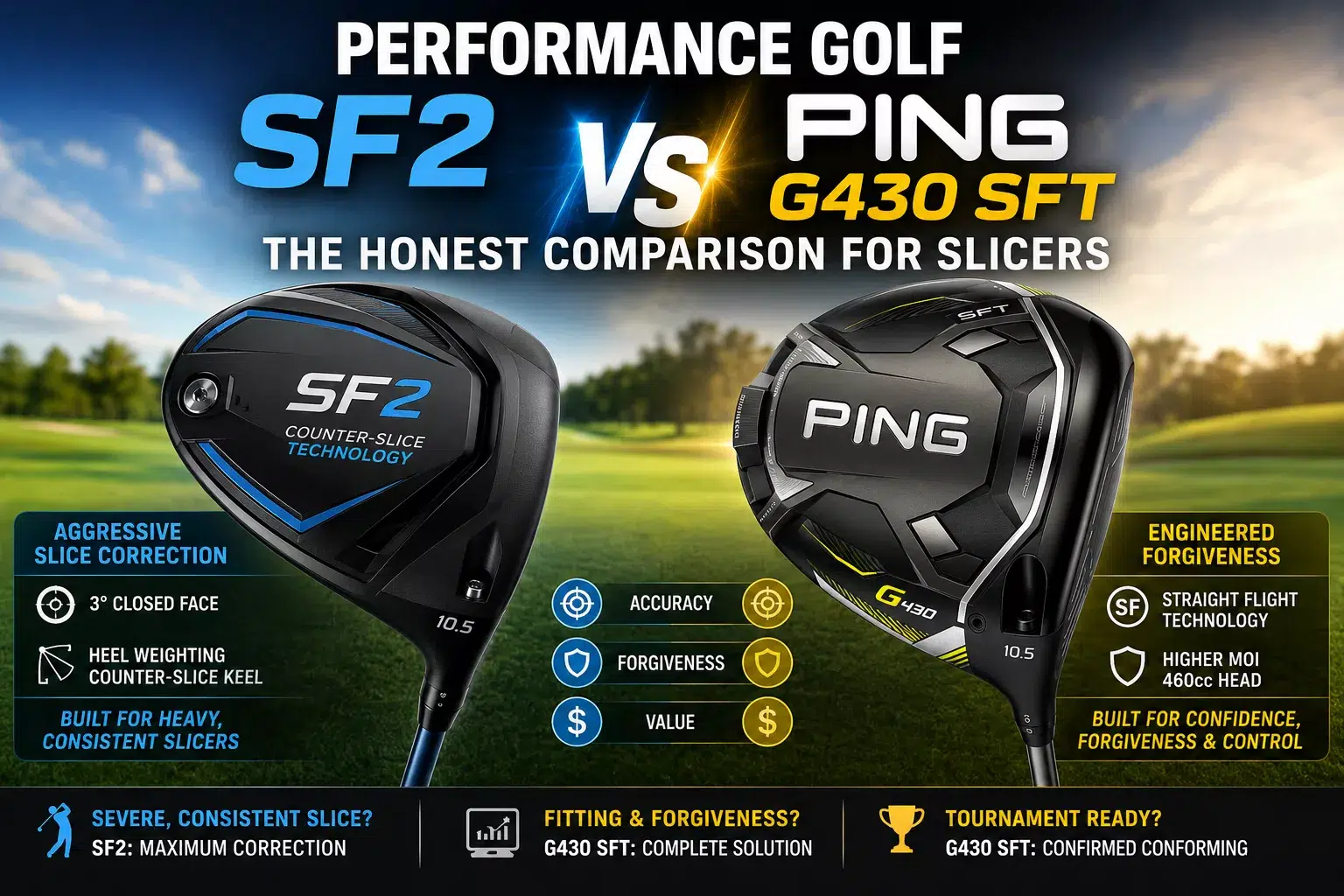
Performance Golf SF2 vs Ping G430 SFT: The Honest Comparison for Slicers
Categories :
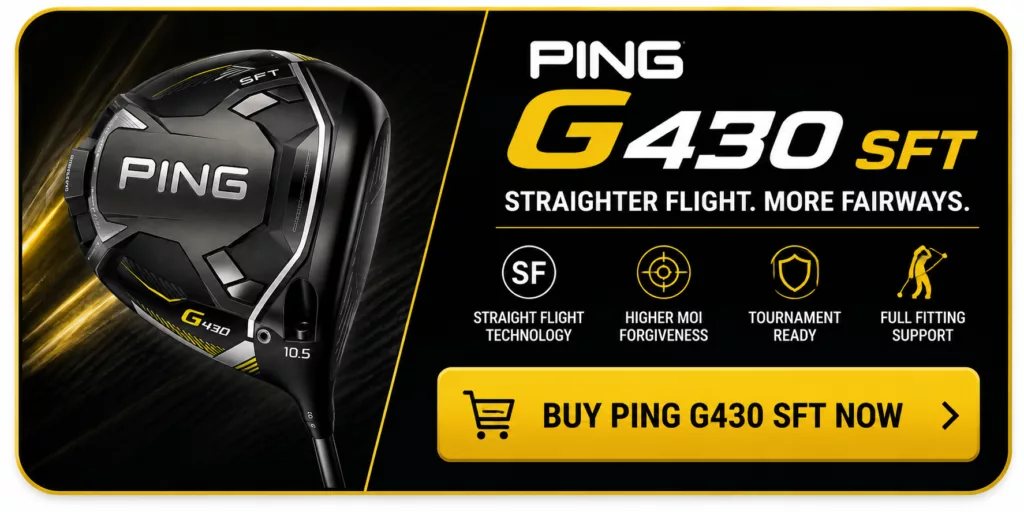
Quick answer: The Ping G430 SFT is a premium, confirmed USGA-conforming draw-bias driver with Ping’s Straight Flight Technology, full custom fitting support, and strong resale value — used examples run $180-$250.
The Performance Golf SF2 is a direct-to-consumer driver engineered more aggressively for heavy slicers, combining a closed face angle with heel weighting at a different price point and purchase experience. Neither is “mostly marketing” — they target different severity levels of the same problem. This guide breaks down exactly which golfer each one is actually built for.
Two Very Different Companies Solving the Same Problem
It’s worth understanding upfront that the SF2 and the G430 SFT come from fundamentally different places in the golf industry, and that shapes everything about how they’re built, sold, and supported.
Ping is one of the most established equipment manufacturers in golf, with decades of tour presence, a full network of certified fitters, and an engineering-first approach to club design. The G430 SFT is part of their mainstream retail lineup, sold through pro shops, big box golf retailers, and Ping’s own fitting centers.
Performance Golf is a direct-to-consumer brand operating primarily through online video marketing rather than traditional retail. The SF2 is sold without the fitting infrastructure or tour pedigree that Ping offers, but it’s also engineered with a narrower, more specific target: golfers with a heavy, consistent slice who haven’t found relief from standard draw-bias equipment.
Understanding this difference in company approach helps explain why the two clubs feel so different to compare directly.
Head-to-Head Specs
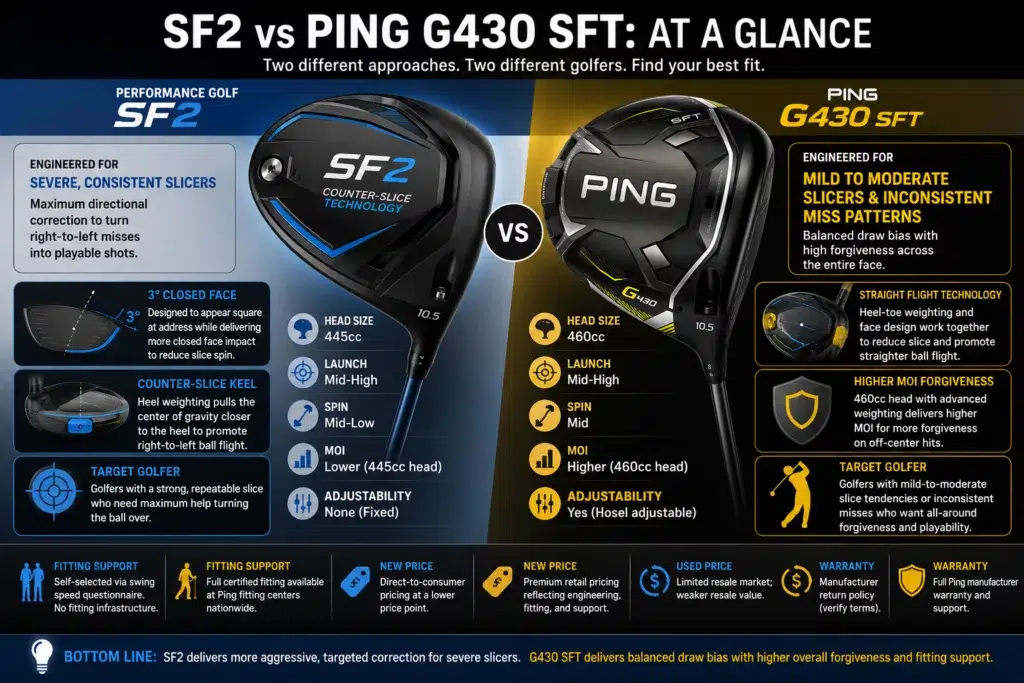
| Feature | Performance Golf SF2 | Ping G430 SFT |
|---|---|---|
| Head Size | 445cc | 460cc |
| Slice Correction Method | 3° closed face + Counter-Slice Keel heel weighting | Straight Flight Technology (heel-toe weighting + face design) |
| Face Angle | Closed, designed to appear square at address | Slightly closed, Ping’s standard SFT calibration |
| Adjustability | Fixed configuration per shaft order | Adjustable hosel for loft and lie customization |
| MOI (Forgiveness) | Lower than max due to smaller head | Higher MOI due to 460cc head and Ping’s weighting distribution |
| USGA Conformance | Marketing claims conforming; independent verification recommended | Confirmed conforming, standard pre-launch USGA submission |
| Fitting Support | Self-selected based on swing speed questionnaire | Full certified fitting available at Ping fitting centers nationwide |
| New Price | Direct-to-consumer pricing | Premium retail pricing |
| Used Price | Limited resale market | $180-$250 (2nd Swing, eBay, Golf Galaxy Pre-Owned) |
| Warranty | Manufacturer return policy (verify terms) | Full Ping manufacturer warranty |
The Core Difference: Aggressive Correction vs. Engineered Forgiveness
This is the heart of the comparison, and it’s worth understanding clearly before you spend money on either club.
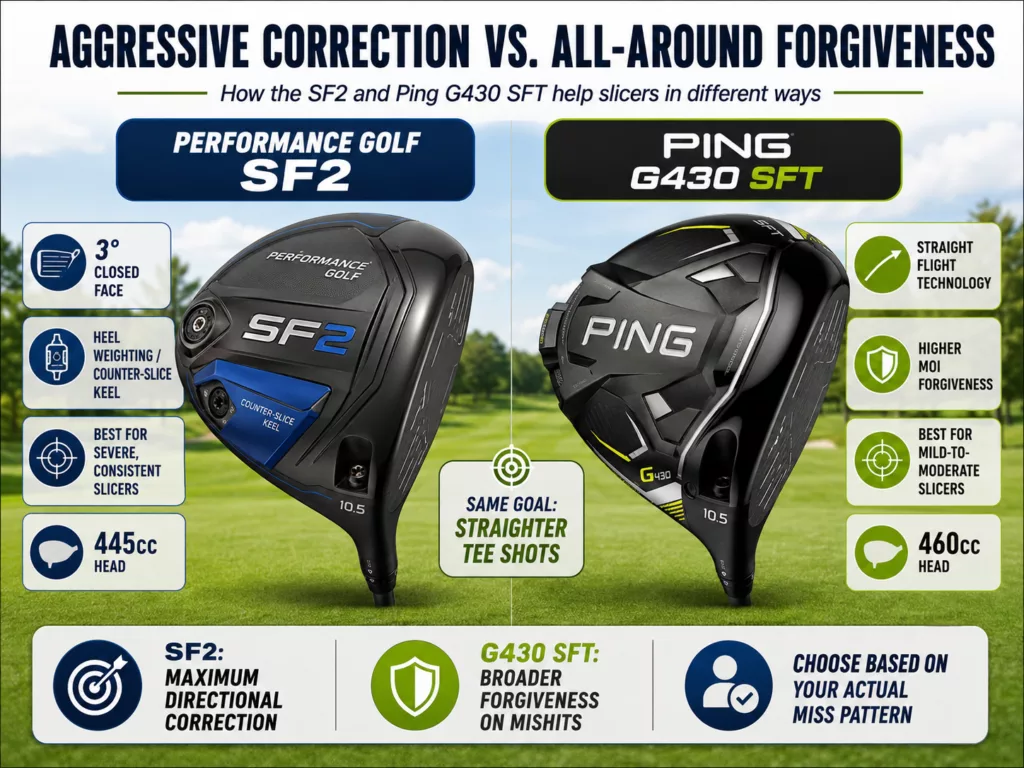
The SF2’s design philosophy assumes the golfer has a severe, fairly repeatable slice and needs maximum directional correction. The 3° closed face combined with the Counter-Slice Keel heel weighting is a more aggressive intervention — it’s trying to actively fight a strong slice tendency through both face angle and CG placement working together.
The G430 SFT’s design philosophy is built around Ping’s broader engineering approach — Straight Flight Technology delivers a more moderate, refined draw bias while preserving the high MOI forgiveness that comes from a full 460cc head and Ping’s weighting expertise. It’s designed for golfers with a mild-to-moderate fade or slice tendency who also want strong all-around forgiveness on mishits anywhere on the face.
The practical difference: If your slice is severe and consistent — meaning you can predict almost every shot will start right and curve further right — the SF2’s more aggressive correction may outperform the SFT for your specific miss pattern.
If your slice is moderate, or if your misses are inconsistent (sometimes a slice, sometimes thin, sometimes off the toe), the G430 SFT’s combination of draw bias and high MOI forgiveness is likely the better overall performer, because it’s not just fighting one specific miss — it’s protecting you across a wider range of mishits.
Forgiveness: Why Head Size and MOI Actually Matter Here
This is a technical point worth slowing down on, because it changes the calculus depending on what kind of miss you actually have.
A 460cc head with Ping’s weighting distribution achieves a higher Moment of Inertia (MOI) than the SF2’s 445cc head. Higher MOI means the clubhead resists twisting on off-center hits — so a strike toward the toe or heel still retains more ball speed and direction control than it would on a lower-MOI head.
The SF2’s smaller 445cc head was a deliberate design tradeoff — Performance Golf prioritized precise internal weight positioning for the Counter-Slice Keel over maximizing head size and MOI. This isn’t necessarily a flaw, but it does mean the SF2 is optimized for directional forgiveness (fighting the slice specifically) rather than omnidirectional forgiveness (protecting against any kind of mishit).
Who this matters for: If you’re a golfer whose miss is specifically and consistently a slice, with otherwise solid contact, the SF2’s directional focus is well-matched to your situation.
If you’re a higher handicapper whose misses are scattered across the face in multiple directions — sometimes a slice, sometimes a thin shot, sometimes a toe strike — the G430 SFT’s combination of draw bias and high MOI forgiveness is the more complete answer, because it’s not assuming your miss pattern is singular and predictable.
Fitting Support: A Real Practical Difference
This is an underrated factor in the comparison that has a real impact on your odds of success with either club.
Ping has one of the most extensive certified fitting networks in golf. You can walk into a Ping fitting center, hit the G430 SFT on a launch monitor with your actual swing, and have a certified fitter adjust loft, lie angle, and shaft selection based on real data — not a questionnaire.
The SF2 is sold without this infrastructure. Performance Golf’s shaft flex recommendation is based on self-reported swing speed estimates rather than an actual fitting session. This means there’s more risk of ending up with a shaft flex or setup that doesn’t perfectly match your swing, since you’re estimating your own swing speed rather than having it measured.
Practical takeaway: If you have access to a Ping fitting center and value getting verified, data-backed fitting before you buy, that’s a meaningful point in the G430 SFT’s favor. If you don’t have easy access to fitting and are comfortable self-selecting based on swing speed estimates, the SF2’s simpler purchase process removes a logistical barrier.
Price and Value: What You’re Actually Paying For
This is where the comparison often gets framed unfairly in either direction, so it’s worth being precise.
The G430 SFT carries premium retail pricing reflecting Ping’s engineering investment, fitting infrastructure, manufacturer warranty, and brand reputation. A used example in good condition typically runs $180-$250, which still represents meaningful value compared to new pricing while retaining the benefits of a fully conforming, professionally engineered club.
The SF2 is positioned at a different price point through its direct-to-consumer model, which removes the overhead of retail distribution and fitting centers.
Whether that represents better value depends entirely on whether the more aggressive, targeted slice correction is what your specific game needs — paying less for a club that’s actually wrong for your miss pattern isn’t a good deal, and paying more for a club with forgiveness you don’t need isn’t either.
Neither club is “mostly marketing.” They’re priced differently because they’re solving the problem with different levels of engineering investment and targeting different severity levels of slice. The right question isn’t which one costs less — it’s which one matches your actual miss pattern and swing profile.
Which One Should You Actually Buy?
Choose the Performance Golf SF2 if:
- Your slice is severe, consistent, and predictable shot after shot
- You don’t have easy access to a professional fitting session
- You’re comfortable with a direct-to-consumer purchase process and have reviewed the return policy
- You’re not planning to use the club in sanctioned tournament play (see our USGA conformance breakdown)
Choose the Ping G430 SFT if:
- Your misses are inconsistent — sometimes a slice, sometimes a different type of mishit
- You want confirmed USGA conformance for tournament and handicap play without verification steps
- You have access to a Ping fitting center and want data-backed fitting before purchasing
- You value manufacturer warranty support and strong resale value if your needs change
Consider trying the SF2 first if budget is a concern, with the G430 SFT as a future upgrade if:
- You’re not yet certain a draw-bias driver will solve your problem and want a lower-cost trial
- You’re willing to accept more resale risk in exchange for a lower upfront cost
- You plan to reassess your equipment needs once you’ve confirmed draw-bias technology works for your swing

A Note on Combining Approaches
Some golfers researching this comparison ask whether it’s worth trying the cheaper SF2 first as a kind of “is draw-bias technology right for me” trial before investing in a premium fitted Ping.
This isn’t an unreasonable approach — if the SF2 demonstrably helps your slice, that’s useful data that confirms draw-bias correction works for your swing, which could inform a future investment in a higher-MOI, professionally fitted option like the G430 SFT. The tradeoff is the SF2’s weaker resale value if you do decide to upgrade later, so factor that into your total cost of testing this approach.
Frequently Asked Questions
Is the Ping G430 SFT actually better than the SF2, or just more expensive? Neither club is universally “better” — they’re engineered for different severity levels of slice. The G430 SFT offers higher overall forgiveness (MOI) and confirmed conformance; the SF2 offers more aggressive, targeted directional correction for severe, consistent slicers.
Can I get the SF2 fitted at a Ping fitting center? No, Ping fitting centers fit Ping equipment. The SF2 does not have access to that fitting infrastructure since it’s a separate, unrelated brand.
Which driver is better for a beginner golfer? This depends on the beginner’s specific miss pattern. A beginner with scattered, inconsistent misses across the face would likely benefit more from the G430 SFT’s higher overall forgiveness. A beginner with one severe, consistent slice may see more targeted benefit from the SF2.
Does the G430 SFT come in different shaft flex and loft options like the SF2? Yes, and more extensively — Ping offers a full range of shaft and loft combinations through their fitting process, plus an adjustable hosel for fine-tuning loft and lie angle after purchase, which the SF2 does not offer.
Is it worth buying both and comparing them myself? Some golfers do exactly this, particularly if they have access to a generous return policy on one or both clubs. If you go this route, test both on a launch monitor if possible, or at minimum on the course over multiple rounds, before deciding which to keep.
This comparison is based on publicly available specifications and manufacturer information as of 2026. Pricing, fitting availability, and product specifications can change — verify current details directly with retailers or manufacturers before purchasing.
Related Post
Golf Equipment Checklist for Complete Beginners Under $300
Last Updated: Julyy 21, 2025 Starting your golf journey doesn’t have to break the bank. [...]
Does a Draw Bias Driver Actually Fix a Slice — Or Just Move the Miss?
Quick answer: A draw bias driver genuinely fixes a slice for most recreational golfers — [...]