This website uses cookies to improve your experience. We\'ll assume you\'re ok with this, but you can opt-out if you wish. Read More
What Time Does Twilight Golf Start? (And When It’s Actually a Deal)
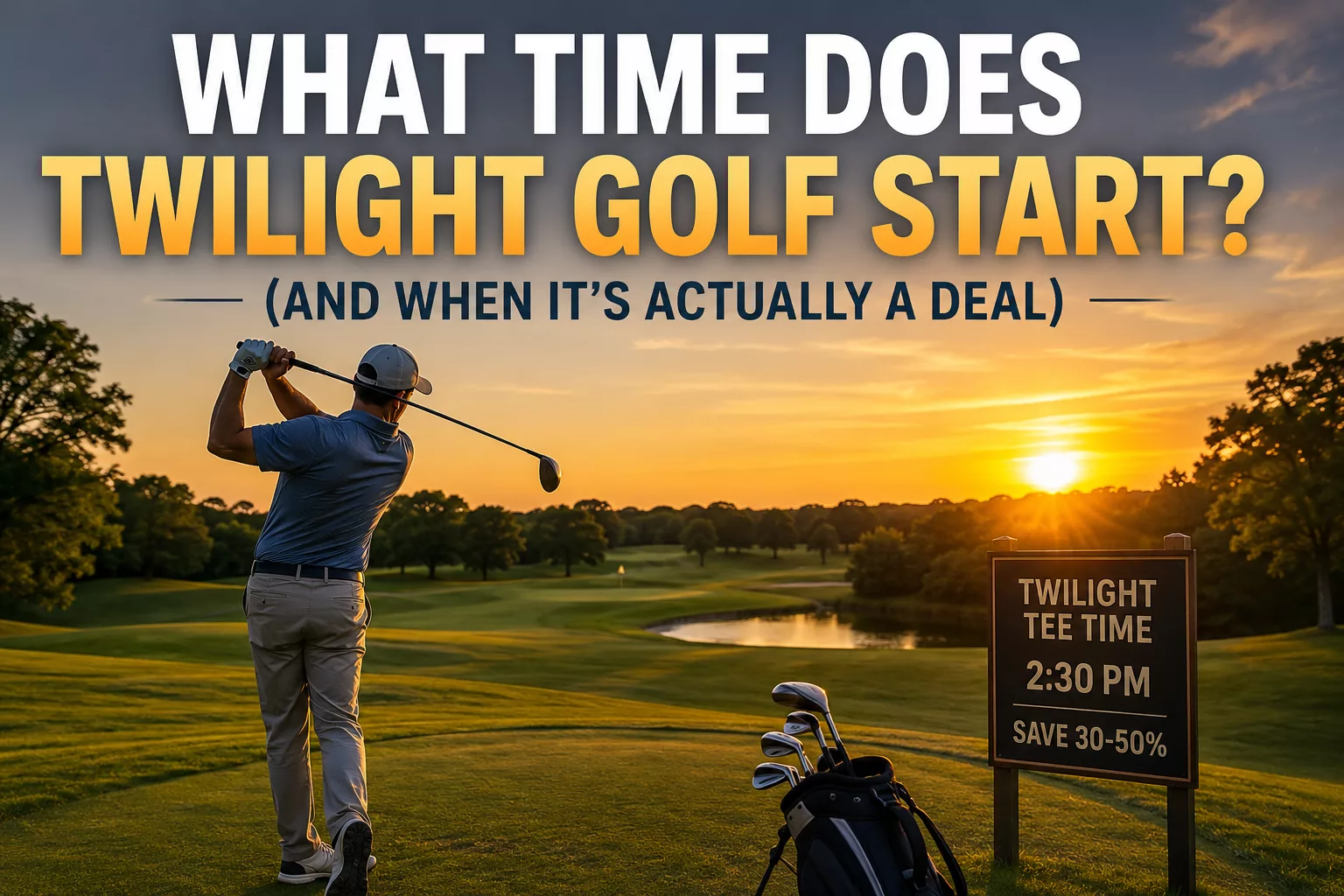
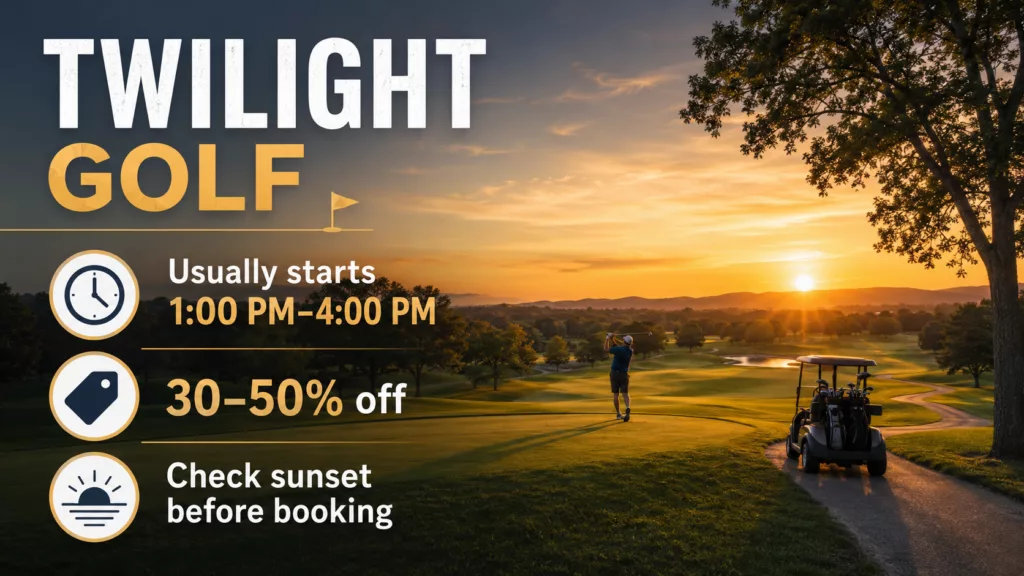
Twilight golf typically starts between 1:00pm and 4:00pm, but there is no industry-standard time — every course sets its own twilight window, and most shift it with the seasons.
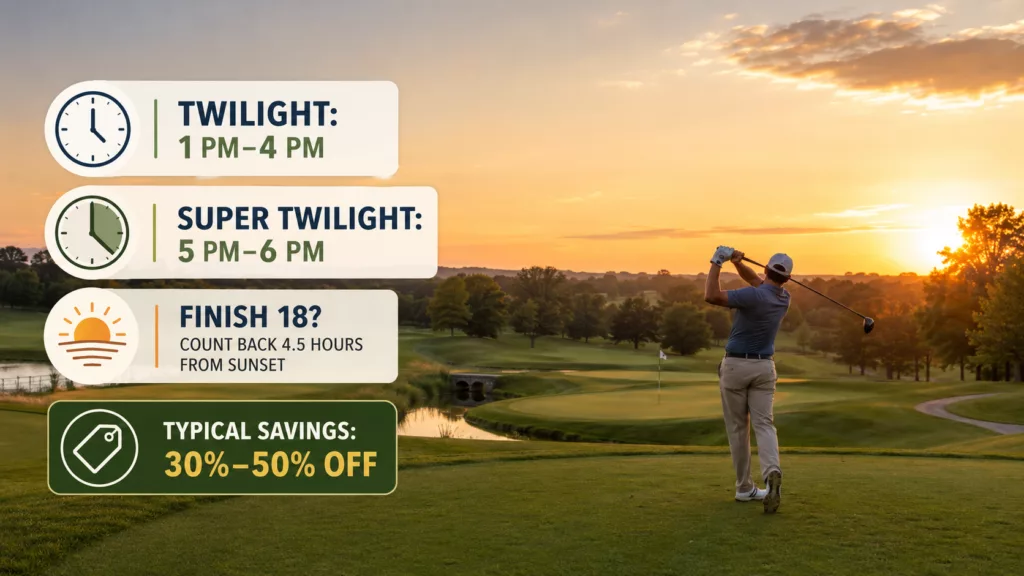
The rate usually runs 30–50% below the peak morning price, making twilight the most widely available discount in public golf. The catch: the later the start, the more you’re racing the sun.
Here’s how to find any course’s real twilight time, figure out whether you’ll actually finish your round, and spot the courses where “twilight pricing” is more marketing than discount.
Why Every Course Defines Twilight Differently
Twilight isn’t an official term — it’s a pricing tier. Courses use it to sell afternoon inventory that would otherwise go empty, so each one draws the line where its own tee sheet starts thinning out:
- Busy courses push twilight late (3–4pm) because they can still sell 1pm times at full rate.
- Quieter courses start twilight as early as noon or 1pm to pull golfers in.
- Seasonal shifts are normal: a course might run 3pm twilight in June and move it to 1:30pm by late September as daylight shrinks.
Some courses add a second, deeper tier — often called super twilight — starting around 5–6pm, discounted 50–60% or more. At that price you’re usually buying 9–12 holes of daylight, not 18, and the course knows it.
The Sunset Math: Will You Actually Finish 18?
This is the calculation most golfers skip, and it’s the difference between a bargain and paying half price for two-thirds of a round.
The formula: count backward 4.5 hours from sunset for a walking 18. Riding, use 4 hours.
A few worked examples:
- June in Wisconsin — sunset around 8:35pm. A 4:00pm twilight time leaves 4 hours 35 minutes: you’ll finish 18 comfortably, even walking.
- Late September — sunset around 6:45pm. That same 4:00pm tee time leaves 2 hours 45 minutes: you’re getting 12–14 holes, maybe fewer behind slow groups.
- Super twilight at 5:30pm in July — sunset around 8:30pm leaves 3 hours: plan on 12–15 holes riding, and treat anything past the 14th as a bonus.
Two adjustments worth making: add time if the course is busy (twilight fields bunch up behind leagues), and subtract a little if you’re a quick twosome that can play through.
If finishing all 18 matters to you, don’t book a twilight time later than sunset minus 4.5 hours. If you just want golf at half price and don’t mind an open-ended finish, book as late as you like.
Twilight vs. Super Twilight: Which Is the Better Deal?
Think of it as price per hole, not price per round.
Twilight (30–50% off) is the better buy when you can start early enough to finish 18. You’re getting the full product at a real discount.
Super twilight (50–60%+ off) wins when you only wanted 9–12 holes anyway — an after-work round, a practice loop, or a walk with your spouse. Paying $18 for 10 holes beats paying $30 for the same 10 holes because you booked regular twilight and ran out of sun.
The false deal is the middle case: booking a late twilight time expecting 18, finishing 13, and effectively paying near-full price per hole. Run the sunset math first and the “deal” question answers itself.
Where to Find a Course’s Real Twilight Time
- The course’s rates page — most list twilight start times by season. If the page only says “twilight rates available,” that’s your cue to call, because unlisted twilight windows are often negotiable in the shoulder season.
- Call the pro shop — one question: “What time does twilight start right now, and do you have a super twilight?” Courses frequently have a later, deeper tier they don’t publish online.
- Booking platforms — afternoon Hot Deals on tee time apps are often twilight inventory in disguise, sometimes priced below the course’s own twilight rate. Just weigh the per-player fees and credit-only refund rules before assuming the app price wins — our breakdown of GolfNow’s fees and when the platform is worth it covers exactly when it does.
Three Twilight Traps to Avoid
The inflated-rack-rate trap. A few courses set an ambitious “regular” rate almost nobody pays, so twilight looks like a 40% discount when it’s really the everyday price.
Quick test: check what the course’s weekday morning times actually sell for on its own booking engine. If mornings routinely go for the “twilight” price, the discount is cosmetic.
The cart-cutoff trap. Some courses stop renting carts an hour or two before dark, or require them back by a set time. If you need a cart, ask when the last cart goes out and when it’s due back — a 5:45pm super twilight time with carts due in at 7:30 quietly shortens your round.
The league-night trap. Weekday twilight often collides with league play. A Tuesday 4pm twilight time behind a 40-player league is half-price golf at half speed. Ask the pro shop which nights leagues run and book twilight on the other ones.
The Bottom Line
Twilight golf starts whenever your course says it does — usually 1–4pm, shifting with the season — and the discount is real at most courses, typically 30–50% off.
The whole game is matching the start time to the remaining daylight: sunset minus 4.5 hours to finish 18, later than that only if you’re happy with a shorter round at a deeper discount.
Check the course’s current twilight time, run the sunset math, dodge league night, and twilight becomes the easiest recurring discount in golf.
Frequently Asked Questions
What time does twilight golf usually start? Most courses start twilight between 1:00pm and 4:00pm, but there’s no industry standard — each course sets its own window and typically shifts it with the seasons, starting twilight earlier as daylight shortens in fall.
How much cheaper is twilight golf? Twilight rates typically run 30–50% below peak rates. Super twilight — a later second tier offered at some courses, usually starting 5–6pm — can run 50–60% off or more, though you’re usually buying 9–12 holes of daylight at that point.
How many hours of daylight do you need to play 18 holes? Plan on 4.5 hours before sunset for a walking round and about 4 hours riding. Add cushion on busy days, since twilight fields often bunch up behind leagues and slower groups.
What is super twilight golf? Super twilight is a deeper discount tier some courses offer for late-day tee times, typically starting around 5–6pm. It’s the best value when you only want 9–12 holes; it’s a poor value if you’re expecting to finish 18.
Is twilight golf worth it? Yes, when the start time leaves enough daylight for the round you want. The math to run: count back 4.5 hours from sunset. Book earlier than that mark to finish 18 at 30–50% off; book later only if a shorter round at a deeper discount suits you.
Related Articles:
How Far in Advance Should You Book a Tee Time? (coming soon)
Related Post

Performance Golf SF2 vs TaylorMade Burner SuperFast 2.0: Which One Should You Actually Buy?
Quick answer: The Performance Golf SF2 is a newer, purpose-built slice-correction driver designed specifically around [...]
Are Golf Discount Cards Worth It? Only If You’d Play Three of the Courses Anyway
A golf discount card pays for itself when at least three of its courses are [...]