This website uses cookies to improve your experience. We\'ll assume you\'re ok with this, but you can opt-out if you wish. Read More
Performance Golf SF2 vs Cleveland Launcher XL Draw: Budget Slicer Driver Showdown
Categories :
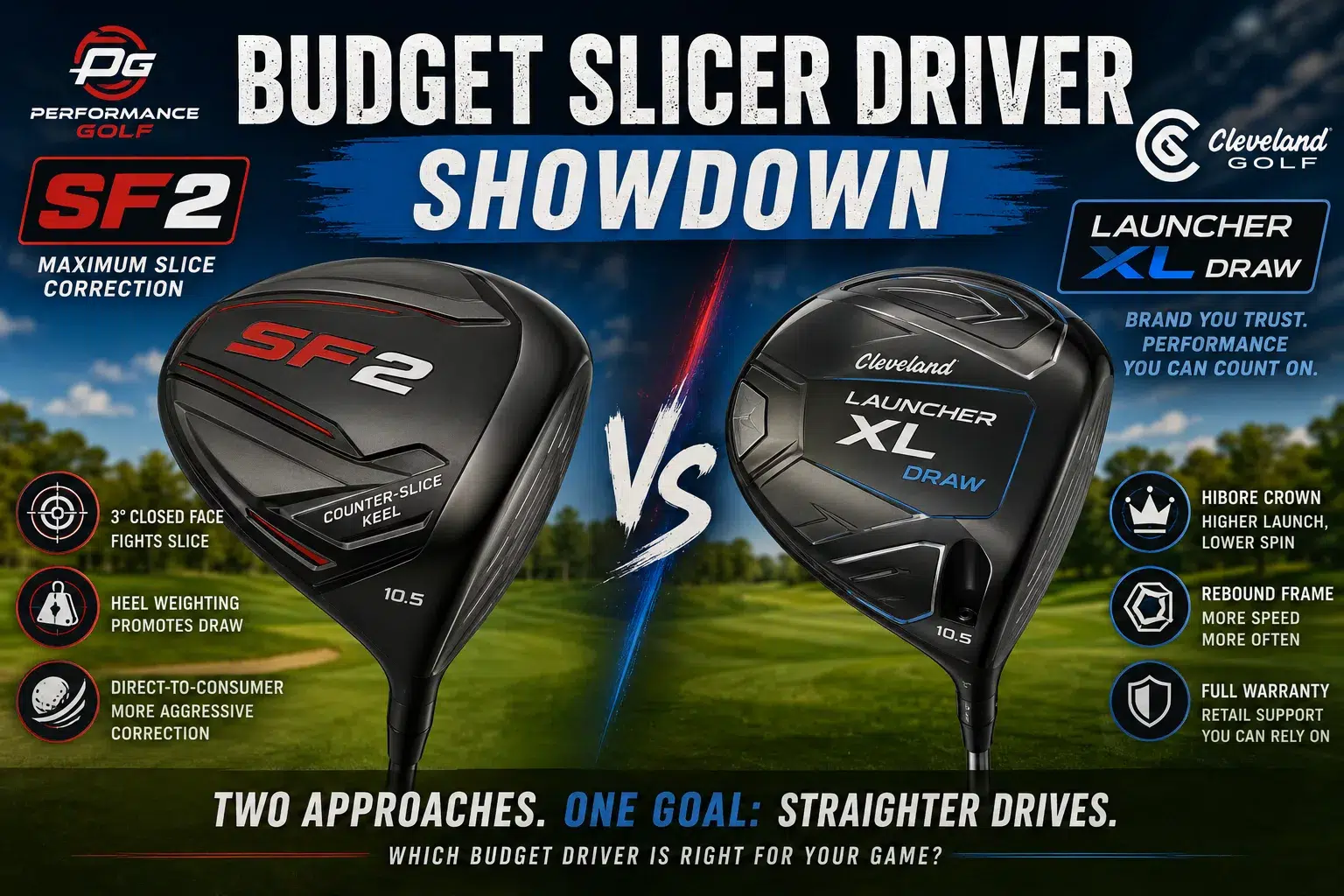
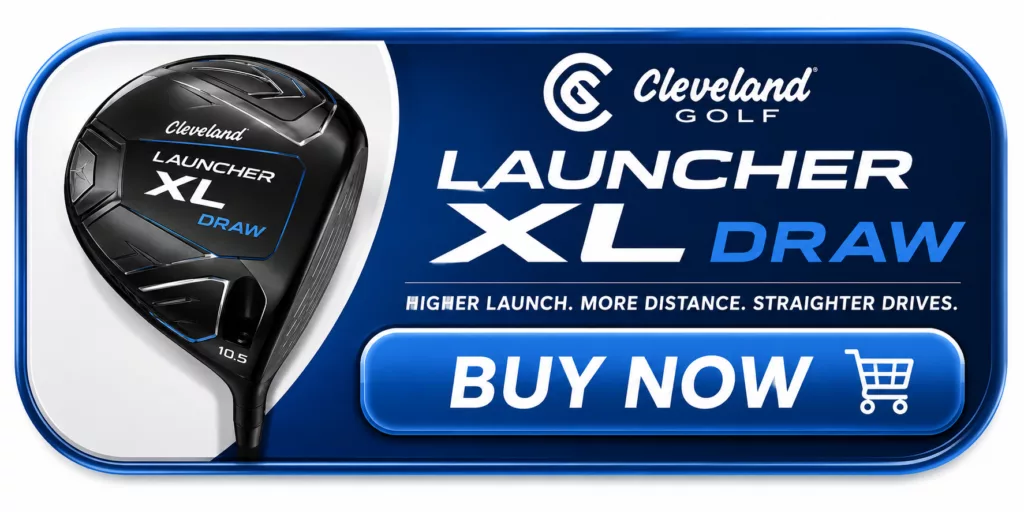
Quick answer: The Cleveland Launcher XL Draw is a brand-new, confirmed USGA-conforming draw-bias driver from a recognized OEM brand with full manufacturer warranty and retail support, priced at a more accessible point than premium options like Ping or TaylorMade.
The Performance Golf SF2 is a direct-to-consumer driver with more aggressive slice correction through its dual closed-face-plus-heel-weighting design.
If you want a new, warranted club from a brand with tour history and retail presence, the Launcher XL Draw is the stronger choice.
If you need maximum slice correction and are comfortable buying direct, the SF2 is more targeted. This guide breaks down exactly where each club wins and loses.
Why This Comparison Matters for Budget-Conscious Slicers
Most draw-bias driver comparisons pit premium options against each other — Ping vs TaylorMade, $250 used vs $400 new.
This comparison is different because it’s specifically about the middle ground: two clubs that both target recreational slicers without the premium pricing of the top-tier OEM options, but from fundamentally different places in the golf industry.
Cleveland Golf is a brand with genuine tour history, decades of wedge expertise, and a reputation for producing highly playable game-improvement clubs at prices that don’t require a second mortgage.
The Launcher XL Draw sits within their mainstream retail lineup — available at Golf Galaxy, PGA Tour Superstore, and online retailers with full manufacturer backing.
Performance Golf operates outside traditional retail entirely, selling the SF2 through direct-to-consumer video marketing. What you gain is more aggressive slice correction engineering targeted very specifically at the recreational slicer.
What you give up is the retail infrastructure, tour credibility, and manufacturer support network that Cleveland provides.
Understanding that difference upfront makes the rest of this comparison straightforward.
Head-to-Head Specs
| Feature | Performance Golf SF2 | Cleveland Launcher XL Draw |
|---|---|---|
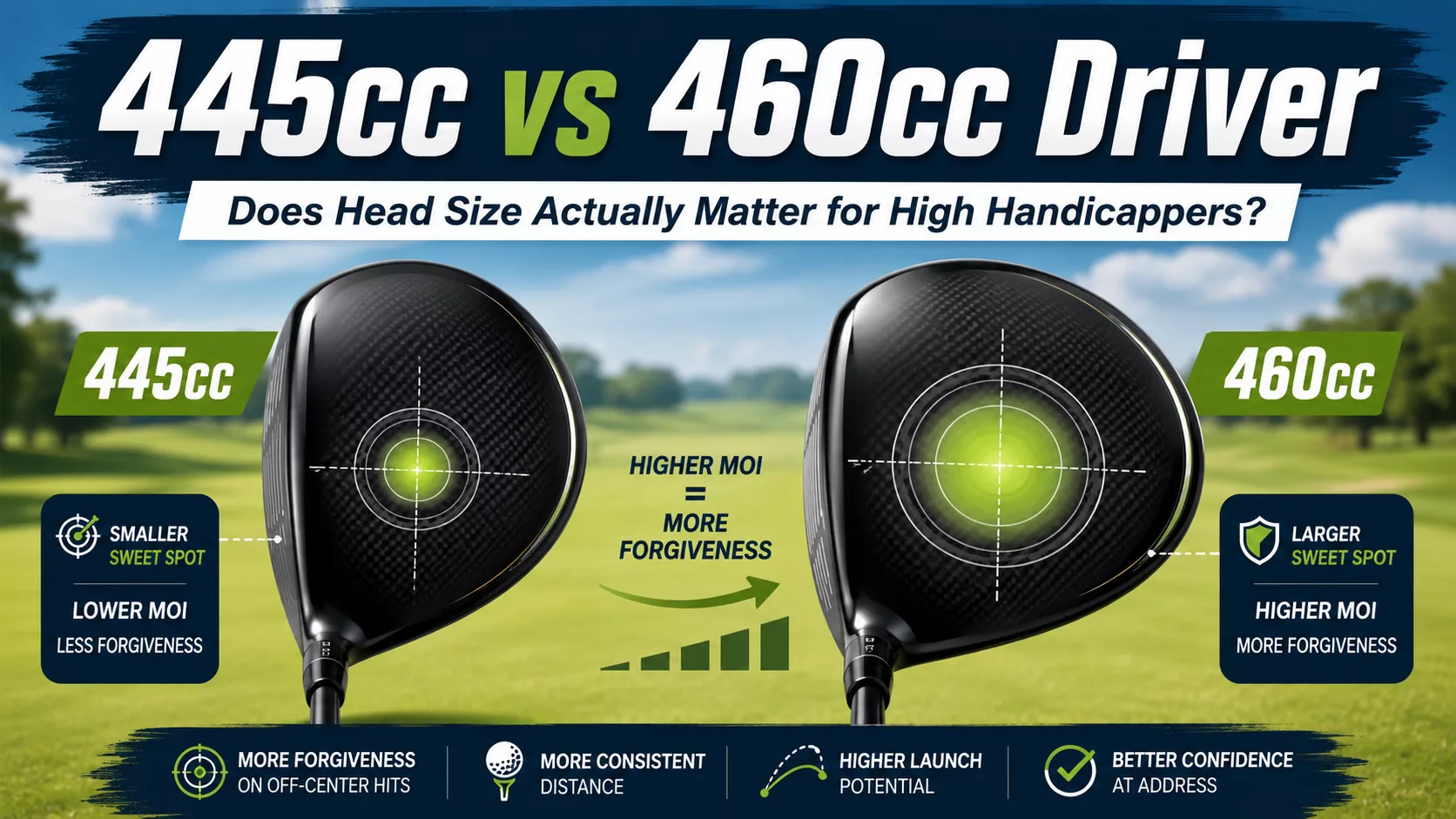
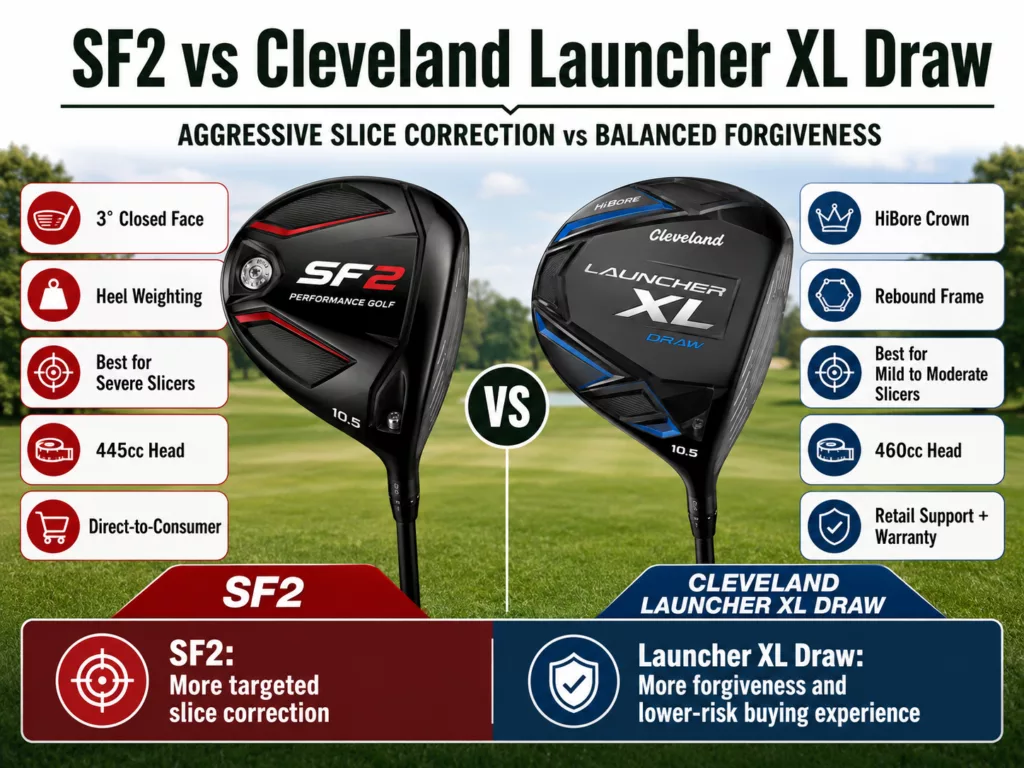
| Head Size | 445cc | 460cc |
| Slice Correction Method | 3° closed face + Counter-Slice Keel heel weighting | Heel-biased CG within HiBore Crown design |
| Face Technology | Forged titanium face | Cleveland’s Rebound Frame flex technology |
| Crown Design | Standard | HiBore Crown — lowers CG for higher launch |
| Adjustability | Fixed | Fixed |
| MOI | Lower due to 445cc head | Higher due to full 460cc head |
| USGA Conformance | Marketing claims conforming; verify independently | Confirmed conforming |
| Manufacturer Warranty | Direct return policy (verify terms before purchase) | Full Cleveland manufacturer warranty |
| Retail Availability | Direct-to-consumer only | Major golf retail chains nationwide |
| Fitting Support | Self-select based on swing speed | Available at retail fitting bays |
| Used Market | Limited resale demand | Growing secondary market as model ages |
Slice Correction: Where the Biggest Difference Lives
This is the most important section of this comparison because the two clubs take meaningfully different approaches to the same problem.
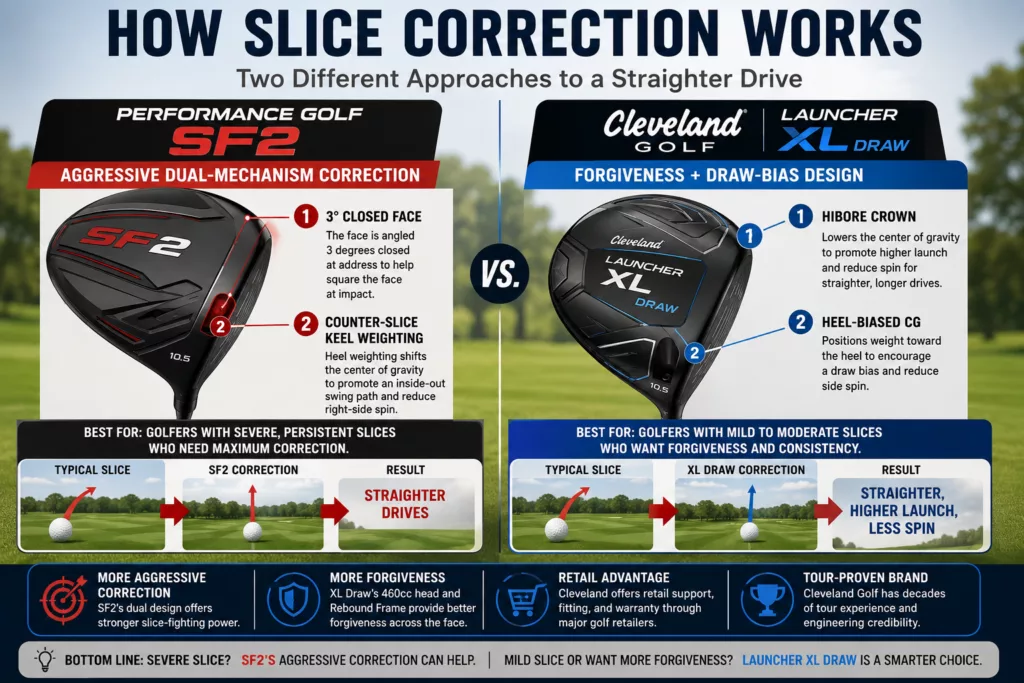
The SF2’s approach is the more aggressive of the two. Combining a 3° closed face angle with the Counter-Slice Keel heel weighting gives the SF2 two active slice-correction mechanisms working simultaneously.
The closed face means the club is already pointing slightly left of target at address, reducing the open face condition at impact. The heel weighting shifts the CG to influence path and promote a more inside-out swing through the impact zone.
Together, these two mechanisms create a more forceful intervention for golfers whose slice is severe and consistent.
The Launcher XL Draw’s approach relies primarily on heel-biased CG positioning within Cleveland’s HiBore Crown design. The HiBore Crown is a structural design that lowers the crown profile to shift the center of gravity lower and deeper, promoting higher launch and reduced sidespin.
The Draw version adds heel weighting to that foundation for a draw bias — a single correction mechanism rather than the SF2’s dual approach.
The practical difference: For golfers with a mild-to-moderate slice, the Launcher XL Draw’s single-mechanism correction is likely sufficient and produces a more predictable, workable ball flight.
For golfers with a severe, heavy slice where almost every drive curves hard right, the SF2’s more aggressive dual-mechanism approach may provide more noticeable correction.
The risk with very aggressive correction is overcorrection — pulling the ball left — which is more likely with the SF2’s forceful approach than with the Launcher XL Draw’s more moderate design.
The HiBore Crown: What It Actually Does
Cleveland’s HiBore Crown technology is worth explaining clearly because it’s a genuine engineering differentiator, not just marketing language.
A standard driver crown sits at a fixed height above the face. The HiBore Crown uses a dramatically lowered profile — the crown is essentially pushed down toward the equator of the club head — which achieves two things simultaneously.
First, it lowers the center of gravity (CG) vertically, promoting a higher launch angle without requiring additional loft.
For recreational golfers with slower swing speeds who tend to launch the ball too low, this is meaningful — more launch angle means more carry distance even without increased ball speed.
Second, the lower CG reduces backspin slightly, which reduces the sidespin component that turns a mis-aimed shot into a slicing curve. Less spin overall means straighter flight even before the draw-bias heel weighting adds its directional influence.
The combination of lower launch CG and heel weighting makes the Launcher XL Draw particularly well-suited for golfers who slice and tend to hit low, weak drives — a common combination at the recreational level.
If that describes your typical miss, the HiBore Crown gives you something the SF2’s more face-angle-focused design doesn’t specifically address.
Rebound Frame Technology: Does It Matter for High Handicappers?
Cleveland’s Rebound Frame is their proprietary face and body flex system, designed to increase ball speed by allowing more of the clubhead to flex and spring back at impact rather than concentrating all the flex in the face alone.
In practical terms for a high handicapper, this means the Launcher XL Draw produces competitive ball speeds across a wider area of the face — including heel and toe strikes — compared to a simpler face design.
For golfers who don’t hit the sweet spot consistently, face technology that maintains ball speed across more of the face has real measurable value on the course.
The SF2’s forged titanium face is a quality construction that produces solid ball speeds at center impact, but it doesn’t incorporate the same multi-component flex system that Cleveland’s Rebound Frame represents.
For golfers with very inconsistent contact, this is a point in the Launcher XL Draw’s favor.
Retail Support vs Direct-to-Consumer: What This Means Practically
This is an underrated factor that affects the ownership experience beyond the initial purchase.
Buying the Cleveland Launcher XL Draw means you can walk into a Golf Galaxy or PGA Tour Superstore, hold the club, make a few practice swings, and potentially hit it on their in-store simulator before committing.
If something goes wrong — a manufacturing defect, a shaft issue — Cleveland’s manufacturer warranty handles it through the retail channel you purchased from. If you decide to sell it later, Cleveland’s brand recognition supports a functional secondary market.
Buying the Performance Golf SF2 is a mail-order experience. You’re making a purchase decision based on video advertising, specs on a website, and whatever independent reviews you can find. There’s no ability to physically handle the club before buying, no in-store fitting bay, and the return process involves shipping rather than walking back into a store.
The direct model isn’t inherently bad — it allows Performance Golf to invest more in the product itself rather than retail overhead — but the purchase experience is fundamentally different and carries more risk for buyers who haven’t done thorough research beforehand.
Price Comparison: What You’re Actually Getting for Your Money
Both clubs occupy a more accessible price point than premium OEM draw-bias options, but they get there differently.
The Cleveland Launcher XL Draw is priced below premium OEM drivers like the Ping G430 SFT or TaylorMade Qi10 Max D-Type while still offering full retail support, manufacturer warranty, and confirmed USGA conformance. It represents the clearest path to a new, backed, draw-bias driver without spending at the top of the market.
The SF2’s direct-to-consumer model removes retail markup but introduces different costs — primarily in the form of purchase risk (no in-store trial), uncertain resale value, and the need to independently verify USGA conformance for competition use.
The honest value comparison: If you’re buying new and want the lowest-risk path to a warranted, conforming draw-bias driver, the Launcher XL Draw offers better total value for most buyers.
If you’re specifically prioritizing maximum slice correction and are comfortable with the DTC purchase model, the SF2’s more aggressive correction may be worth the tradeoff.

Who Should Buy Each Club
Choose the Cleveland Launcher XL Draw if:
- You want a new, warranted driver from a recognized OEM brand without premium pricing
- You value the ability to physically handle or demo the club before purchasing
- Your slice is mild to moderate rather than severe
- You play in handicap rounds or club competitions and need confirmed conformance
- You want the additional launch benefit of the HiBore Crown’s lower CG for a higher ball flight
- You prefer buying through traditional retail with established return and warranty processes
Choose the Performance Golf SF2 if:
- Your slice is severe and consistent on almost every drive
- You’ve already tried moderate draw-bias options without sufficient correction
- You’re comfortable with a direct-to-consumer purchase process and have reviewed the return policy
- You don’t currently play in sanctioned competitions requiring confirmed USGA conformance
- Maximum directional correction is your single highest priority
A Third Option Worth Considering
If you’re comparing these two clubs primarily on price and want to stretch your budget further, a used Ping G430 SFT at $180-$250 represents a meaningful step up in overall engineering, forgiveness, and resale value compared to either option at new pricing. It’s worth factoring into your decision if used market buying is acceptable to you.
Alternatively, a used Cleveland Launcher XL Draw as the model ages into the secondary market could represent the strongest pure value play — OEM brand, confirmed conformance, Rebound Frame technology, and HiBore Crown, at a used price that undercuts both new options significantly.
Frequently Asked Questions
Is the Cleveland Launcher XL Draw USGA conforming? Yes — as a standard OEM release through major retail channels, the Cleveland Launcher XL Draw went through standard USGA conformance submission. It is confirmed conforming for tournament and handicap play.
Which driver has more forgiveness — the SF2 or the Launcher XL Draw? The Launcher XL Draw has higher overall MOI forgiveness due to its full 460cc head and Rebound Frame technology. The SF2’s smaller 445cc head prioritizes directional correction over omnidirectional forgiveness.
Can I demo the Cleveland Launcher XL Draw before buying? Yes — the Launcher XL Draw is available through major golf retail chains including Golf Galaxy and PGA Tour Superstore, where in-store demos and simulator fitting bays are typically available.
Does the Cleveland Launcher XL Draw come in a left-handed version? Cleveland typically offers left-handed options in their Launcher XL line — confirm current availability directly with Cleveland Golf or your retailer of choice before purchasing.
What shaft flex options does the Cleveland Launcher XL Draw come in? Cleveland typically offers the Launcher XL Draw in Regular, Senior, and Stiff flex options through standard retail. Confirm current shaft matrix options with your retailer before purchasing.
Is there a used market for the Cleveland Launcher XL Draw? Yes, though availability grows as the model ages. Check 2nd Swing, eBay, and Golf Galaxy Pre-Owned for current used pricing and availability.
This comparison is based on publicly available specifications and manufacturer information as of 2026. Pricing and availability can change — verify current details directly with retailers or manufacturers before purchasing.
Related Post

Budget Golfer’s Complete Guide: Save $2,000+ This Year
Master the art of affordable golf without sacrificing your passion for the game Bottom Line [...]
SF2 Driver Shaft Flex Guide: How to Pick the Right Flex for Your Swing Speed
Quick answer: The Performance Golf SF2 driver comes in five shaft flex options matched to [...]