This website uses cookies to improve your experience. We\'ll assume you\'re ok with this, but you can opt-out if you wish. Read More
Best Draw Bias Drivers 2026: Ranked and Reviewed for High Handicappers
Categories :
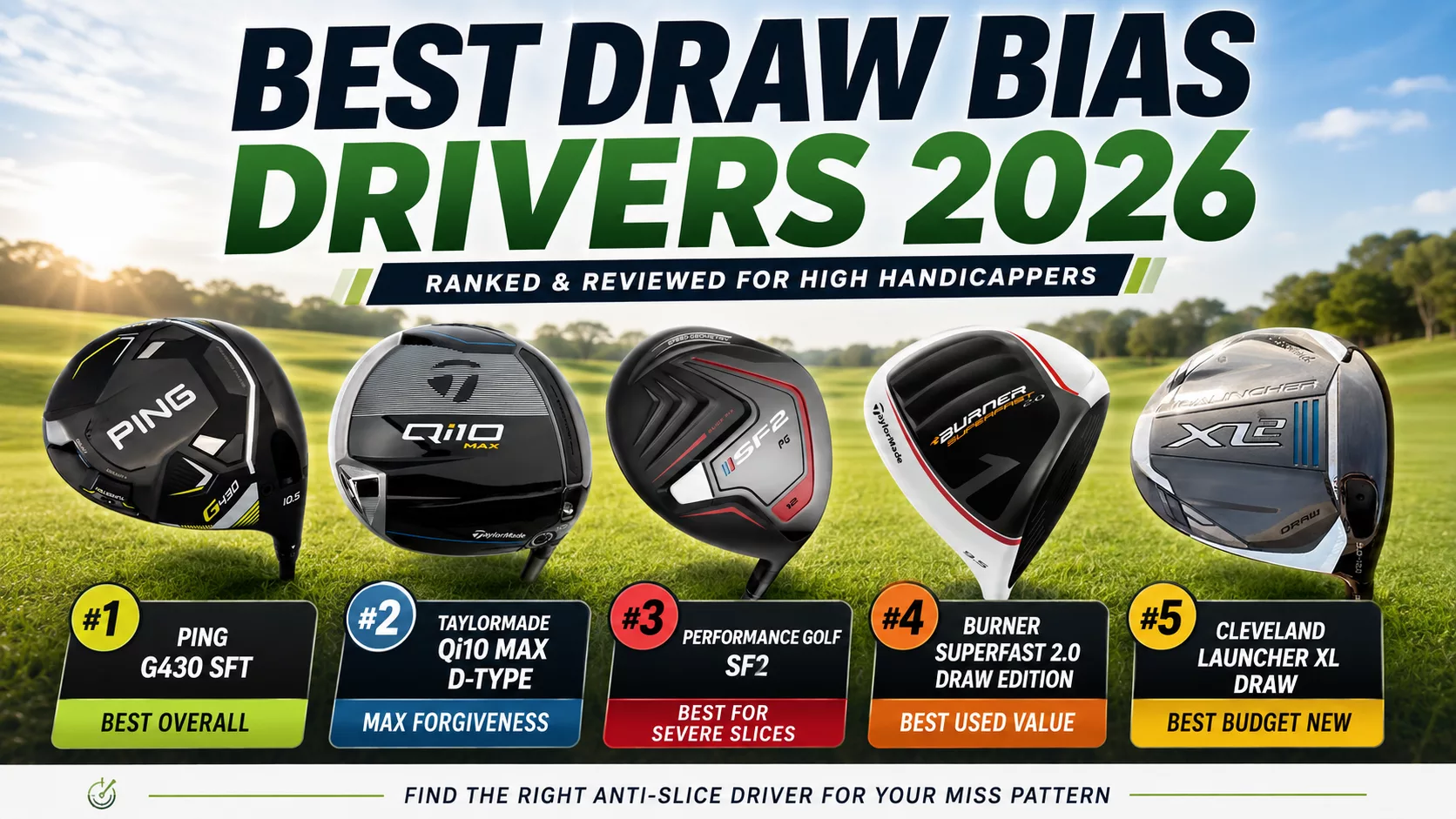
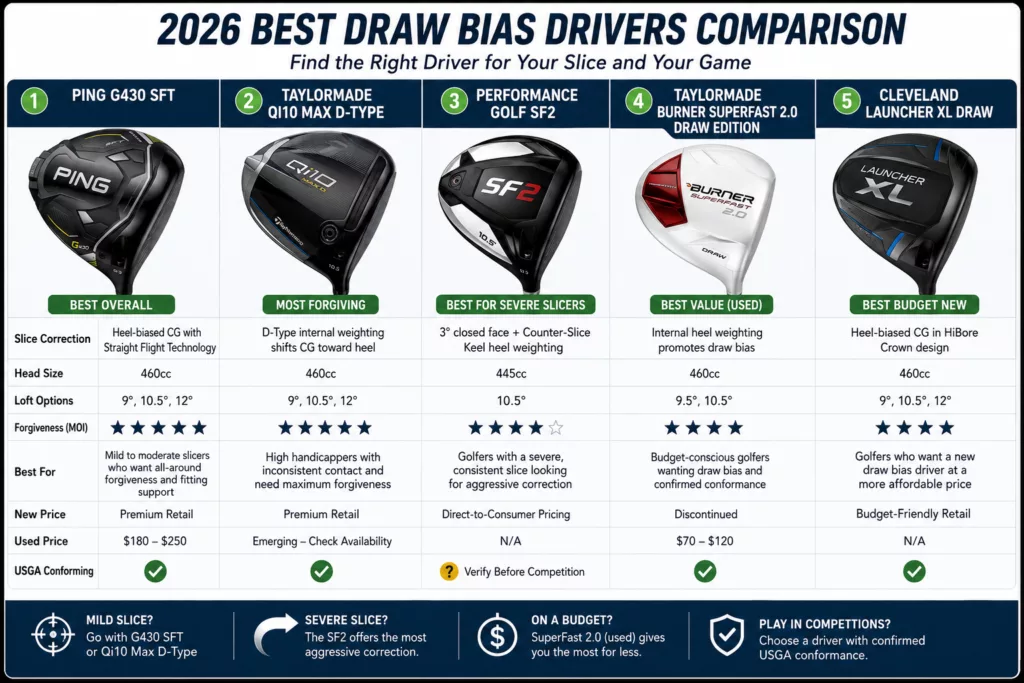
Quick answer: The best draw bias drivers for high handicappers in 2026 are the Ping G430 SFT (best overall for confirmed conformance and high MOI forgiveness), the TaylorMade Qi10 Max D-Type (best for maximum forgiveness with draw bias), the Performance Golf SF2 (best for severe, consistent slicers buying direct), the TaylorMade Burner SuperFast 2.0 Draw Edition (best used market value under $120), and the Cleveland Launcher XL Draw (best budget new driver with draw bias). This guide breaks down exactly which one matches your specific situation.
Why Most Draw Bias Driver Roundups Get It Wrong
Most “best draw bias driver” articles hand you a ranked list without telling you the one thing that actually determines which club will work for your game: the severity and consistency of your slice.
A golfer with a mild fade needs a completely different tool than a golfer whose ball flight is a hard banana slice on every drive. A golfer who plays in club competitions needs a confirmed USGA-conforming club. A golfer on a tight budget needs a different answer than one who can spend $400 without hesitation.
This guide is organized around those real differences rather than treating every slicer as the same buyer.
What Makes a Driver “Draw Bias” — And Why It Matters
Before ranking specific clubs, it’s worth understanding what draw bias actually means in engineering terms, because not all draw bias is created equal.
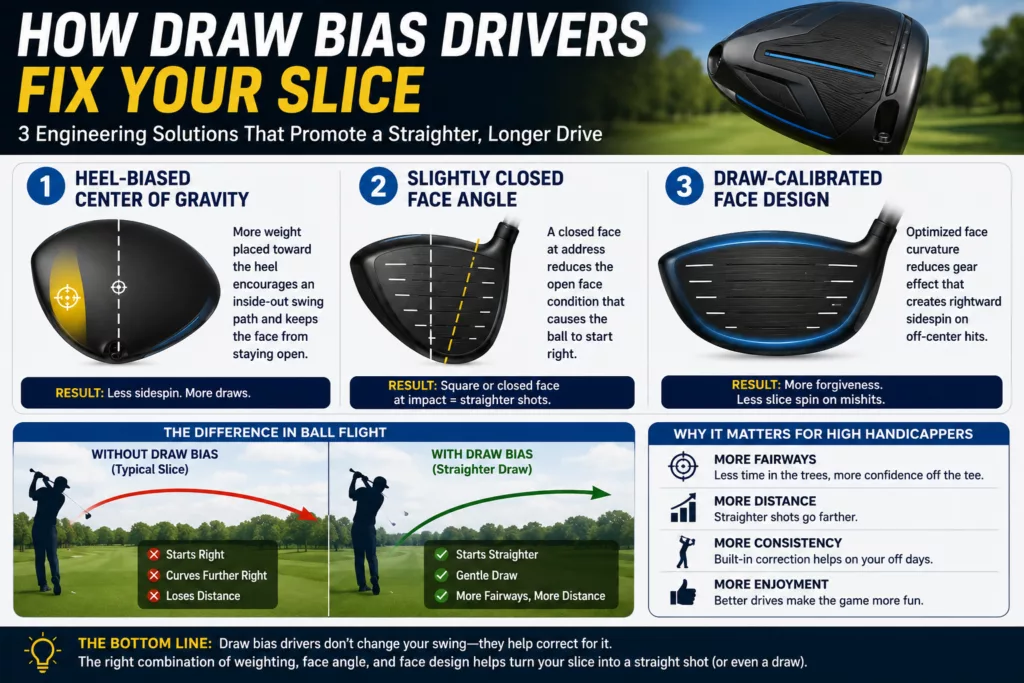
Draw bias in a driver is typically achieved through one or more of three mechanisms:
1. Heel-biased center of gravity (CG): Shifting internal weight toward the heel side of the clubhead promotes a more inside-out swing path through impact and makes the face more likely to be square or slightly closed at contact. This is the most common draw-bias mechanism and is used in virtually every club on this list.
2. Closed face angle: Setting the face angle 1-3 degrees closed at address means the face is already pointing slightly left of target at setup, which reduces the open face condition at impact that causes a slice. More aggressive than CG positioning alone.
3. Draw-calibrated face bulge: Modifying the horizontal curvature of the face to influence gear effect and reduce the rightward spin that comes from heel strikes.
The most effective slice-correction drivers combine two or more of these mechanisms. The weakest options rely on just one. Understanding which mechanism a specific club uses helps you match it to the severity of your slice.
The Rankings
#1 — Ping G430 SFT
Best Overall Draw Bias Driver for High Handicappers
Why it ranks first: The G430 SFT represents the most complete package for a high handicapper who slices — combining confirmed USGA conformance, a full 460cc high-MOI head, Ping’s Straight Flight Technology heel weighting, and access to Ping’s certified fitting network.
It doesn’t have the most aggressive slice correction on this list, but it delivers that correction within a package that also protects against every other type of mishit a high handicapper is likely to produce.
Slice correction mechanism: Heel-biased CG via Straight Flight Technology internal weighting, combined with a slightly closed face angle calibrated to Ping’s SFT specification.
Head size: 460cc — maximum allowed, highest possible MOI
Who it’s right for: High handicappers with a mild-to-moderate slice whose misses are inconsistent across the face; golfers who play in competitions and need confirmed conformance; golfers who want professional fitting support before purchasing.
Who it’s wrong for: Golfers with a severe, heavy slice who need maximum face angle correction; buyers on a strict budget who can’t access used pricing.
New price: Premium retail pricing Used price: $180-$250 (2nd Swing, eBay, Golf Galaxy Pre-Owned) USGA conformance: Confirmed
#2 — TaylorMade Qi10 Max D-Type
Best for Maximum Forgiveness Combined With Draw Bias
Why it ranks second: The Qi10 Max D-Type is TaylorMade’s answer to the question of what happens when you combine their highest-MOI driver head with built-in draw bias.
The result is a club that protects against more types of mishits than almost anything else on this list while still actively correcting a slice tendency. It’s the choice for high handicappers whose misses are genuinely all over the face, not just directionally right.
Slice correction mechanism: Internal D-Type weighting shifting CG toward heel, combined with TaylorMade’s Inertia Generator for maximum MOI preservation.
Head size: 460cc
Who it’s right for: High handicappers with inconsistent contact across the full face who also slice; golfers who want the absolute latest face technology and ball speed; buyers who prioritize forgiveness above all else.
Who it’s wrong for: Budget-conscious buyers — this is a premium-priced current generation driver; golfers who need the most aggressive possible closed face correction for a severe slice.
New price: Premium current generation retail pricing Used price: Emerging used market as the model ages — check 2nd Swing for current availability USGA conformance: Confirmed
#3 — Performance Golf SF2
Best for Severe, Consistent Slicers Buying Direct
Why it ranks third: The SF2 earns its place on this list by doing one thing more aggressively than anything else here — correcting a severe, predictable slice.
The combination of a 3° closed face angle and the Counter-Slice Keel heel weighting is the most targeted slice-correction approach on this list, and for the golfer whose ball flight is consistently hard right on every drive, that targeted correction can outperform higher-MOI options that spread their forgiveness across multiple miss directions.
Slice correction mechanism: 3° closed face angle combined with Counter-Slice Keel internal heel weighting — the most aggressive dual-mechanism approach on this list.
Head size: 445cc — smaller than maximum, a deliberate tradeoff for more precise weight positioning
Who it’s right for: Golfers with a severe, consistent, predictable slice; buyers comfortable with a direct-to-consumer purchase experience; recreational golfers who don’t need confirmed USGA conformance for competition play.
Who it’s wrong for: Golfers who play in sanctioned competitions (verify USGA conformance before use); buyers whose misses are inconsistent or scattered across the face rather than directionally predictable; golfers who want strong resale value if the club doesn’t work out.
Price: Direct-to-consumer pricing — check current pricing at Performance Golf’s website USGA conformance: Marketing claims conforming; independent verification recommended before competition use

#4 — TaylorMade Burner SuperFast 2.0 Draw Edition
Best Used Market Value Under $120
Why it ranks fourth: At $70-$120 on the used market, the SuperFast 2.0 Draw Edition offers genuine draw-bias correction from a confirmed-conforming TaylorMade product at a price point where no current-generation driver can compete. For golfers who want to test whether draw-bias technology works for their game without a large financial commitment, this is the most logical starting point.
Slice correction mechanism: Internal heel weighting promoting draw-bias ball flight — a single-mechanism approach, less aggressive than the SF2’s dual-mechanism design.
Head size: 460cc — full maximum, strong MOI for its era
Who it’s right for: Budget-conscious golfers wanting a low-risk trial of draw-bias technology; golfers who want confirmed USGA conformance at a low price; buyers comfortable shopping the used market with careful version verification.
Who it’s wrong for: Golfers with a severe slice who need maximum correction; buyers who want shaft adjustability; anyone unwilling to potentially have the 46.5-inch stock shaft trimmed to modern standard length.
New price: Discontinued — used market only Used price: $70-$120 (eBay, 2nd Swing, Callaway Golf Pre-Owned) USGA conformance: Confirmed — verify current list status at usga.org for competition use

#5 — Cleveland Launcher XL Draw
Best Budget New Driver With Draw Bias
Why it ranks fifth: If you want a brand-new, warranted, draw-bias driver from a recognized OEM brand without paying premium Ping or TaylorMade prices, the Cleveland Launcher XL Draw fills that gap.
Cleveland’s Launcher XL series is specifically designed for high handicappers and game-improvement players, and the Draw version adds heel weighting consistent with Cleveland’s mainstream draw-bias philosophy.
Slice correction mechanism: Heel-biased CG positioning within Cleveland’s HiBore Crown design, which lowers the center of gravity to promote higher launch and reduced sidespin.
Head size: 460cc
Who it’s right for: Buyers who want a new, warranted driver with OEM support at a more accessible price than Ping or TaylorMade premium models; golfers with mild-to-moderate slice tendencies who also want high launch.
Who it’s wrong for: Golfers who need aggressive face angle correction for a severe slice; buyers focused primarily on resale value (Cleveland holds less secondary market value than Ping or TaylorMade).
New price: More accessible than premium OEM options — check current retail pricing USGA conformance: Confirmed
How to Choose the Right One for Your Game
Use this decision framework before spending any money:
Step 1 — Rate your slice severity:
- Mild (occasional fade, sometimes straight): G430 SFT or Qi10 Max D-Type
- Moderate (consistent right miss but playable): G430 SFT, SuperFast 2.0 Draw Edition, or Cleveland Launcher XL Draw
- Severe (hard banana slice on almost every drive): Performance Golf SF2
Step 2 — Consider your budget:
- Under $120: SuperFast 2.0 Draw Edition (used)
- $120-$200: Used G430 SFT
- $200+: New G430 SFT, Qi10 Max D-Type, SF2 or Cleveland Launcher XL Draw
Step 3 — Consider competition play:
- Play in sanctioned events: G430 SFT, Qi10 Max D-Type, Cleveland Launcher XL Draw, or SuperFast 2.0 (verify current status)
- Recreational only: Any of the above plus the SF2
Step 4 — Consider your miss pattern consistency:
- Consistent, predictable slice: SF2 or SuperFast 2.0 Draw Edition
- Inconsistent misses in multiple directions: G430 SFT or Qi10 Max D-Type for higher overall MOI
Frequently Asked Questions
What is the most forgiving draw bias driver in 2026? The TaylorMade Qi10 Max D-Type offers the highest combination of MOI forgiveness and draw bias currently available in a new driver. The Ping G430 SFT is a close second with slightly more moderate draw bias but exceptional overall forgiveness.
Can a draw bias driver fix a severe slice permanently? Draw bias drivers reduce or eliminate slicing for many golfers, but they work with your existing swing rather than changing it. A golfer with a very severe out-to-in swing path may find that draw bias equipment produces a pull-left miss rather than a straight shot. For permanent slice elimination, combining draw bias equipment with basic swing instruction produces better long-term results than equipment alone.
Is draw bias the same as offset in a driver? No. Draw bias refers to internal CG positioning and face angle adjustments that promote a draw ball flight. Offset refers to the hosel being set ahead of the face, which gives the hands more time to close the face through impact. Some drivers use both, but they’re different engineering approaches to a related problem.
How much distance will I lose with a draw bias driver compared to a neutral driver? For most high handicappers who slice, a draw bias driver produces more total distance than a neutral driver — not because it adds ball speed, but because a straighter ball flight loses less distance to the curvature and offline landing position of a slice. The distance you gain from hitting more fairways typically outweighs any marginal ball speed difference between a draw bias and neutral head.
Should I get fitted for a draw bias driver? Yes, if you have access to a fitting center. A launch monitor fitting confirms your actual swing speed for shaft selection, identifies whether your slice is path-based or face-angle-based (which affects which correction mechanism to prioritize), and verifies your optimal loft for maximum carry distance. Ping’s fitting network is the most accessible for the draw bias options on this list.
This roundup reflects publicly available specifications and pricing as of 2026. Prices and availability change — verify current details directly with retailers before purchasing.
Related Post

Are Municipal Golf Courses Any Good? What to Expect in 2026
Are Municipal Golf Courses Any Good? What to Expect Before You Book Municipal golf courses [...]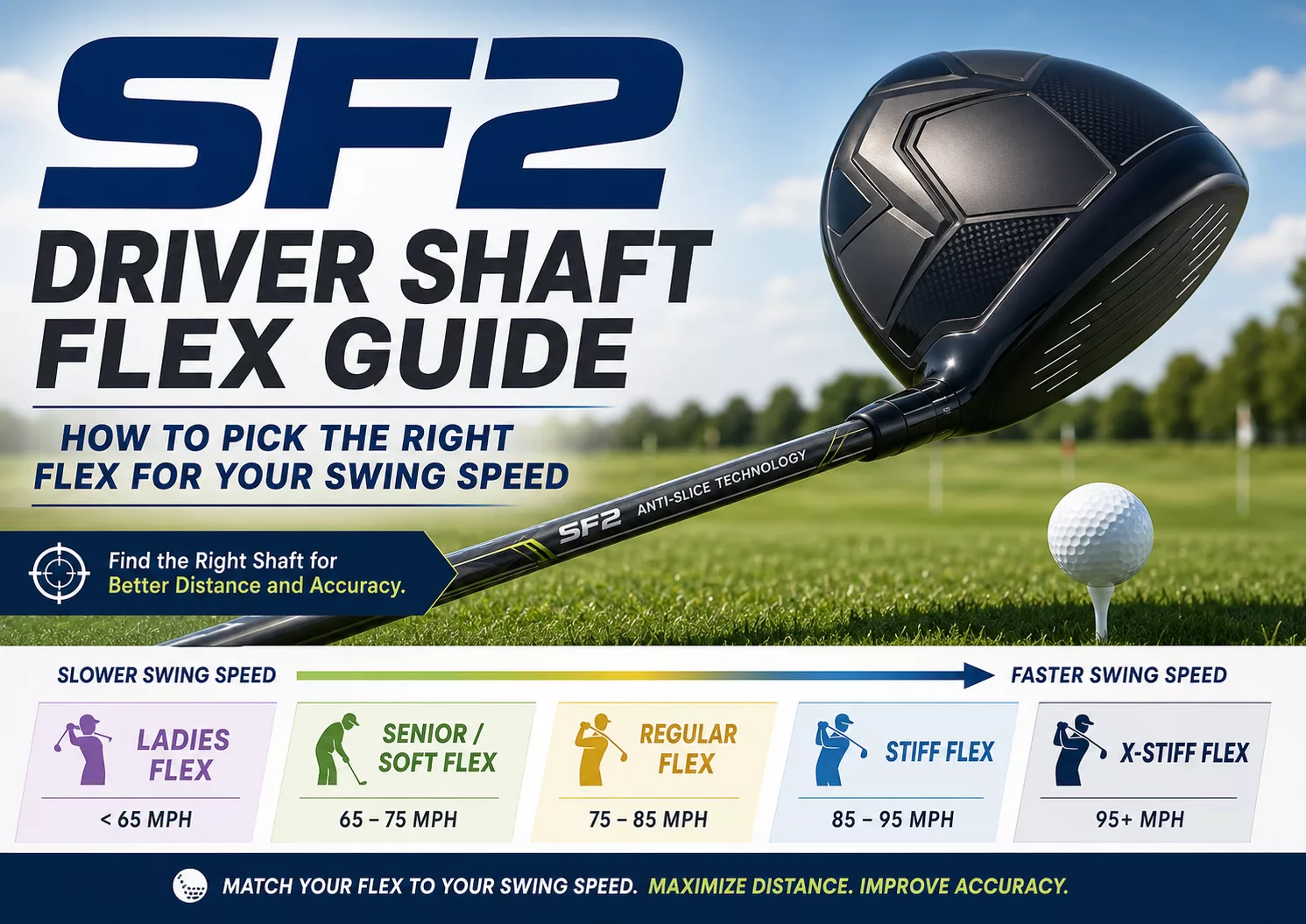
SF2 Driver Shaft Flex Guide: How to Pick the Right Flex for Your Swing Speed
Quick answer: The Performance Golf SF2 driver comes in five shaft flex options matched to [...]