This website uses cookies to improve your experience. We\'ll assume you\'re ok with this, but you can opt-out if you wish. Read More
Are Golf Discount Cards Worth It? Only If You’d Play Three of the Courses Anyway
A golf discount card pays for itself when at least three of its courses are ones you’d genuinely drive to and play regardless — which, for most regional cards, is the real test rather than the number of courses printed on the box.
Cards typically run $30–$100 and offer discounts or two-for-one deals at a list of participating courses. Whether that’s a bargain or a donation comes down to a calculation almost nobody does before buying. Here it is.
How do golf discount cards work?
Most cards give you a set discount at each participating course — commonly $10–20 off a round, or a two-for-one green fee — usually limited to one use per course per season, sometimes two.
That structure matters enormously. A card advertising “50 courses” isn’t offering 50 discounted rounds you’ll take; it’s offering one discounted round at each of 50 courses, most of which you’ll never visit.
Your actual savings equal the discount multiplied by the number of listed courses you’d realistically play — not the number on the cover.
How many rounds does a golf discount card take to pay off?
Divide the card price by the per-round savings. A $99 card saving $10 per round breaks even at 10 rounds at 10 different participating courses. A $60 card with two-for-one deals worth $35 each breaks even after two used offers.
| Card price | Savings per use | Uses to break even |
|---|---|---|
| $30 | $10 | 3 uses |
| $60 | $15 | 4 uses |
| $99 | $10 | 10 uses |
| $99 | $30 (2-for-1) | 4 uses (3.3 rounded up) |
| $150 | $20 | 8 uses |
The trap hides in the right-hand column. Ten uses means ten separate courses if the card is one-use-per-course — and ten courses you’d actually drive to is a much taller order than ten rounds.
What’s the biggest mistake people make with golf cards?
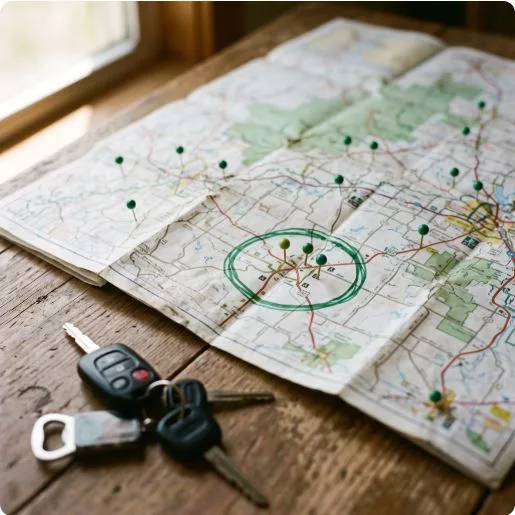
Buying a card whose best courses are 45 to 90 minutes away. Regional cards pad their course lists geographically, and the impressive-sounding count usually includes courses across an entire metro area or state.
Be honest about drive time. A course 50 minutes out isn’t one you’ll play four times a season to chase a $12 discount — you’ll play it once, if that. Count only the courses within about 25 minutes of home or work. If three or more of those are on the card and you’d play them anyway, the card is likely worth it. If it’s one or two, it isn’t.
Are local cards better than regional or national ones?
Usually, yes. A card covering the courses in your own county concentrates its value where you actually play, while a statewide card spreads it across places you won’t drive to.
Municipal and county courses frequently participate in local cards, and those are already the cheapest golf around — so the discount stacks on an inexpensive base. Our guide to judging municipal course quality covers finding the good ones near you before you commit to a card built around them.
Local cards are also often sold by golf associations, high school booster clubs, or charities, which means lower prices and sometimes better terms than commercial regional cards.
Is GolfPass the same thing as a discount card?
No, and conflating the two leads people to buy the wrong product. A traditional discount card is a one-time purchase giving you set discounts at a course list.
GolfPass is an annual subscription in the NBC Sports golf ecosystem, currently around $119/year for the GolfPass+ tier, built around a different value proposition: waived booking fees on a set number of tee times, monthly tee time credits, added cancellation flexibility, and instructional content.
Which is right depends on how you book. If you book frequently through tee time apps, the waived per-player fees are the main draw — our breakdown of what those booking fees actually cost shows how quickly they add up for foursomes.
If you book directly with local courses and rarely use apps, a subscription built around waiving app fees does very little for you, and a local card will serve you better.
Should you buy a card or a season pass?
Cards suit variety; passes suit volume at one course.
If you play 15–25 rounds across many different courses, a card fits your pattern. If you play 40+ rounds and most of them could happen at one course, a season pass almost always wins on pure math — our season pass break-even guide runs that calculation, including the cart-fee detail most golfers miss.
There’s also a middle path worth considering: a modest local card plus paying per round, which keeps your flexibility while shaving the cost of the courses you rotate through.
What restrictions should you check before buying?
Cards live and die on their fine print. The ones worth checking:
- Days and times. Many cards are weekday-only, or exclude weekend mornings entirely. This is the most common restriction and the one that quietly kills a card’s value for working golfers.
- Uses per course. One per season is standard; two is generous; unlimited is rare and usually means the discount is small.
- Cart requirements. Some discounts apply only with a paid cart, which claws back part of the savings.
- Blackout dates. Holidays and tournament days.
- Expiration. Most cards run a calendar or golf season, not 12 months from purchase — a card bought in August may have two months of life.
- Whether it stacks. Many cards can’t combine with twilight or senior rates, meaning you pick one. If your usual play is twilight rounds that are already 30–50% off, a card offering $10 off the standard rate may be worth nothing to you.
That last one deserves real attention. Golfers who already play discounted tee times often find a card adds nothing on top.
Are there senior or junior card tiers?
Many cards offer them, typically 20–35% below the standard card price. They’re worth asking about, though the same stacking question applies — if the card can’t combine with the senior rate you’d already receive, the card’s marginal value shrinks.
Our guide to senior green fee discounts covers what you’d be getting without a card, which is the baseline any card has to beat.
When do golf discount cards go on sale?
Late winter and very early spring, typically January through March, when card sellers push for pre-season revenue. Discounts of 20–30% off the card price are common in that window.
The other buying window is late season — August and September — when unsold cards get marked down. Those are only worth it if you’ll play enough in the remaining weeks to clear a much lower break-even.
The worst time to buy is May and June at full price, which is exactly when most golfers buy them.
How do you evaluate a card in five minutes?
Run this before any purchase:
- Open the course list. Cross out everything more than 25 minutes from home or work.
- Count what’s left. Three or more courses you’d play anyway? Keep going. Fewer? Stop here.
- Multiply. Remaining courses × savings per use = realistic maximum savings.
- Compare to the card price. If realistic savings don’t clear the price by a comfortable margin, pass.
- Check the stacking rule. If you typically play twilight or senior rates and the card can’t combine, subtract those rounds from step 2 and redo it.
Most cards fail at step 2. The ones that survive all five steps are usually genuinely good buys.
The Bottom Line
Golf discount cards work when they’re local, when at least three participating courses are ones you’d play anyway, and when the discount stacks with how you actually book. They fail when the course list is padded with drives you won’t make, when weekday restrictions don’t match your schedule, or when you already play discounted tee times the card can’t improve on.
Count the nearby courses, multiply by the savings, compare to the price. Five minutes of arithmetic decides it.
Have you bought a golf card that actually paid for itself — or one that turned out to be a dud? Drop a comment below with the card and roughly how many times you used it.
Card value varies enormously by region, and a note from someone who’s used the same one you’re considering is worth more than any sales page. If you’re weighing a specific card right now, post the details and we’ll help you run the math.
Frequently Asked Questions
Are golf discount cards worth it? A golf card is worth it when at least three participating courses are within about 25 minutes of home or work and are courses you’d play anyway. Multiply those courses by the per-use savings and compare against the card price. Cards fail most often because their course lists are padded with courses too far away to realistically visit.
How many rounds does a golf discount card take to pay off? Divide the card price by the savings per use. A $99 card saving $10 per round breaks even at 10 uses, while a $60 card with two-for-one offers worth $35 breaks even after two. Since most cards limit you to one use per course, break-even usually requires playing that many different courses, not that many rounds.
Is a local golf card better than a regional one? Usually. Local cards concentrate their value in courses you can actually reach, while regional and statewide cards spread it across a wider area that inflates the course count without increasing your realistic savings. Local cards sold by golf associations or booster clubs also tend to be cheaper.
Can you combine a golf discount card with twilight or senior rates? Often not. Many cards prohibit stacking with other discounts, meaning you choose whichever is better rather than combining them. This significantly reduces a card’s value for golfers who already play discounted twilight or senior tee times, so it’s worth confirming the stacking policy before buying.
When is the best time to buy a golf discount card? Late winter through early spring, roughly January to March, when sellers offer pre-season pricing often 20 to 30 percent off. Late-season markdowns in August and September can also work if enough playing weeks remain to clear the lower break-even. Buying at full price in May or June is the worst value.
Related Post
Best Golf Balls for Wisconsin Public Course Players (2025 Performance Guide)
Losing golf balls is part of the game, especially when you’re learning on Wisconsin’s challenging [...]
Best Golf Drivers 2025: Wisconsin Course-Tested Reviews Under $400
Finding the perfect golf driver can transform your game, but with dozens of options available, [...]