This website uses cookies to improve your experience. We\'ll assume you\'re ok with this, but you can opt-out if you wish. Read More
What Is the Best Driver for a Corporate Golf Outing If You Rarely Play?
Affiliate disclosure: AffordableGolfCourses.com may earn a commission if you buy through links on this page, at no extra cost to you. Prices were checked in October 2026 and change often.
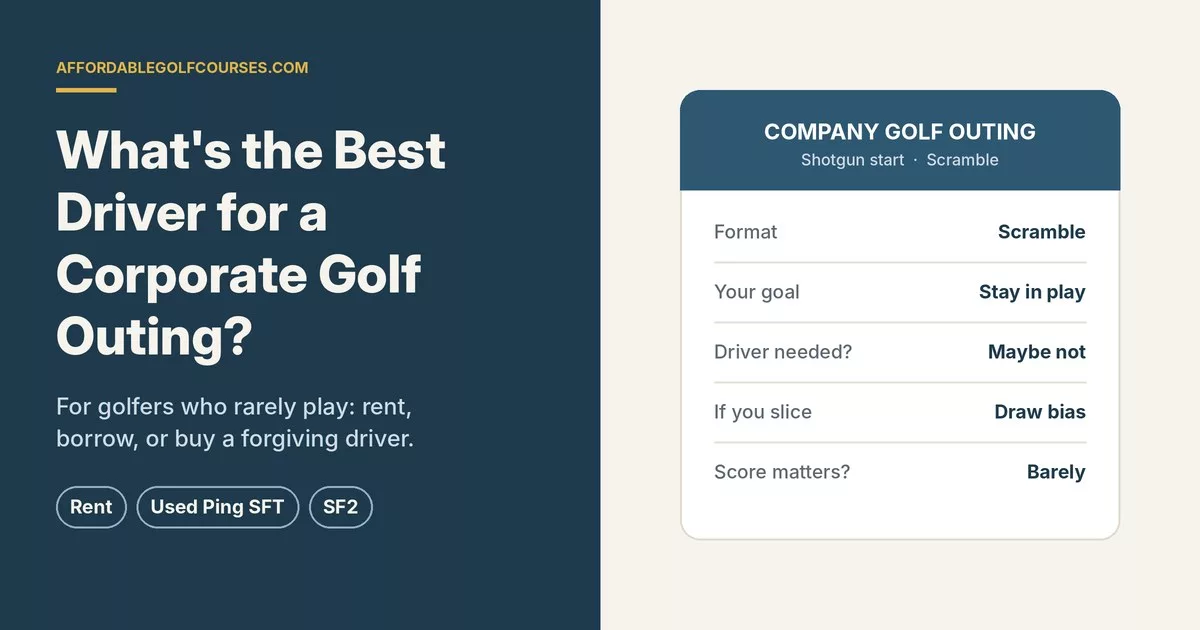
Quick answer: If your company golf outing is the only round you’ll play this year, you may not need to buy a driver at all. Ask whether the course has rental clubs, borrow a set, or hit a 3-wood or hybrid off the tee. If you’ll play two or more outings a year and you slice, a forgiving draw-bias driver is worth it.
A used Ping G430 SFT ($180–$250) is the safe, conforming choice. The Cleveland Launcher XL2 Draw (often around $200 on sale) is the best new-club value. The Performance Golf SF2 ($299) is the strongest fix if you slice nearly every drive. Whatever you use, the goal is the same: a drive that stays in play in front of people you work with.
What Makes a Corporate Golf Outing Different?
A corporate outing is different from a regular round because the score barely matters and the impression does. You’re playing with your boss, your coworkers, or a client, often on a nicer course than you’d book yourself.
Most corporate outings share a few traits:
- They’re usually scrambles. Each player hits, the team picks the best shot, and everyone plays from there. One good drive from your foursome is all the team needs.
- They often use a shotgun start. Every group starts at the same time on a different hole, so the pace matters more than usual.
- Many attendees barely play. You’re probably not the only one who hasn’t touched a club since last year’s outing.
- The first tee has an audience. Other groups, carts, and sometimes a photographer.
If this sounds a lot like a charity event, it is. Our guide to the best driver for a charity golf scramble covers the scramble strategy in detail. This article focuses on what’s different when the people around you are work contacts.
Do You Even Need to Buy a Driver for One Outing?
Often, no. If this is your only round of the year, buying a driver is optional. Here are your cheaper options:
Ask about rental clubs. Many courses that host corporate outings keep rental sets. Ask the event organizer or call the pro shop a week ahead. Rentals are usually standard men’s or women’s sets, not fitted clubs, but they’re fine for a scramble.
Borrow a set. A friend’s or family member’s clubs work, as long as the shafts aren’t far too stiff or too long for you.
Skip the driver entirely. A 3-wood or hybrid is easier to hit straight than a driver for most occasional golfers. In a scramble, nobody will notice or care. Your teammates will thank you for a fairway hit at 170 yards over a 220-yard drive into the woods.
When buying makes sense: you’ll play two or more outings a year, you’d like to play a little more on your own, or you’ve already tried a borrowed driver and sliced everything.
What Should You Look for in a Driver for a Work Outing?
Look for a driver that is forgiving, easy to launch, and helps a slice. You’re not chasing distance. You’re avoiding the one shot everyone remembers.
1. High forgiveness. A rusty swing hits the heel and toe a lot. A large, high-MOI head keeps those mishits closer to the fairway.
2. Draw bias, if you slice. Most occasional golfers miss right. A draw-bias driver closes the face a little more easily, which shrinks the slice. Our best draw bias drivers of 2026 ranked compares the field.
3. More loft. Choose 10.5° or more, and 12° if it’s offered. Higher loft reduces sidespin and helps the ball get up. Our driver loft guide for slicers explains why.
4. A shaft that matches your swing. Too stiff makes a slice worse. If you’ve never measured your swing speed, our guide on how to measure your swing speed without a launch monitor takes about ten minutes.
What Are the Best Drivers for a Corporate Golf Outing?
Here are the four options worth considering, from cheapest to strongest correction.
| Driver | Price (Oct 2026) | Best for | Conforming? |
|---|---|---|---|
| Used TaylorMade Burner SuperFast 2.0 Draw | $70–$120 | Spending as little as possible | Yes |
| Cleveland Launcher XL2 Draw | ~$200 on sale | Best new-club value | Yes |
| Used Ping G430 SFT | $180–$250 | A trusted name that holds resale value | Yes |
| Performance Golf SF2 | $299 | A slice on nearly every drive | Check before sanctioned play |
Used TaylorMade Burner SuperFast 2.0 Draw ($70–$120)
This is a 2011-era driver with a cult following, and the Draw Edition adds heel weighting to fight a slice. It’s the cheapest way to own a forgiving draw driver. The trade-off is older face technology and a long 46.5″ shaft, which can be harder to control for a rusty swing. Read more in our SF2 vs Burner SuperFast 2.0 comparison.
Cleveland Launcher XL2 Draw (~$200 on sale)
The best new-club value for an occasional golfer. It has internal heel weighting, a full 460cc head, and a lightweight build for moderate swing speeds. It’s not adjustable, which is fine. You won’t be tinkering with settings before a work outing.
Used Ping G430 SFT ($180–$250)
Ping’s SFT line has been the go-to anti-slice driver for years. It’s confirmed conforming, widely known, and holds its resale value, so if you stop playing, you can sell it and get much of your money back. That makes it a low-regret choice for someone who isn’t sure golf will stick. We compare it head to head in SF2 vs Ping G430 SFT.
Performance Golf SF2 ($299)
The SF2 is the most aggressive slice correction on this list, with a closed face, heel weighting, and plenty of loft. If you’ve tried a regular driver and sliced nearly every ball, this is the one most likely to keep you in play on day one. It’s sold direct with a 365-day money-back guarantee, which helps if you’re unsure.
Performance Golf says it’s legal for play, but it isn’t a concern for a corporate scramble either way. See our full Performance Golf SF2 review.
Considering the SF2 driver?
The full review covers whether the slice correction actually holds up for real golfers — not just what the marketing says — plus what the order page adds on at checkout that most buyers don’t see coming.
Read the full SF2 reviewWhich Driver Should You Pick for Your Situation?
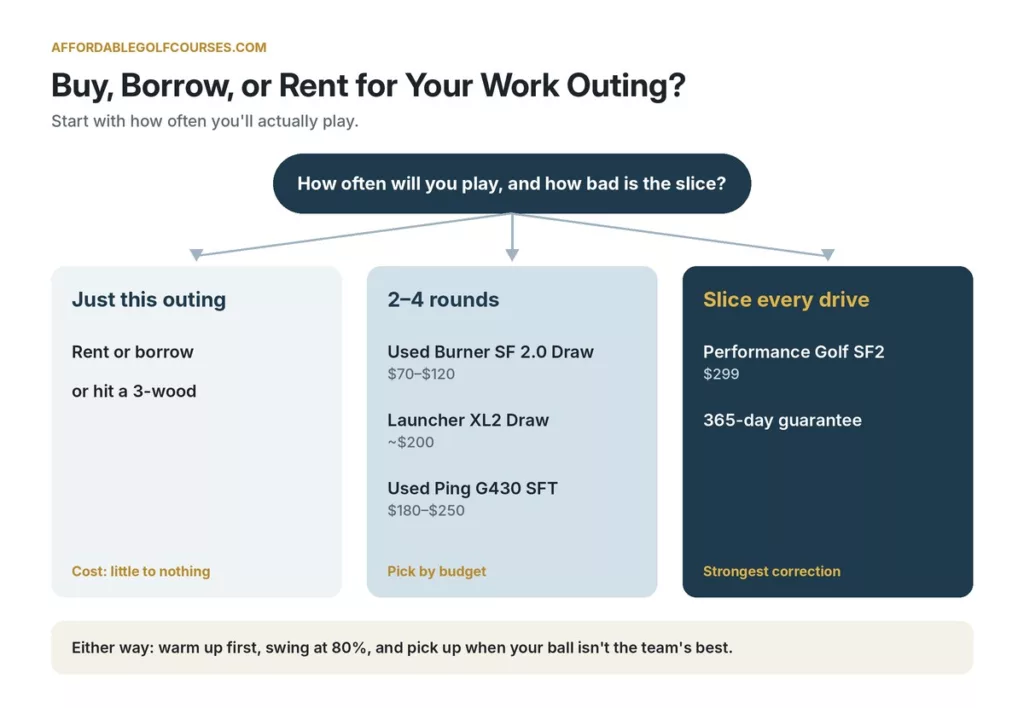
Pick based on how often you’ll play and how badly you slice:
- One outing a year, no plans to play more: rent, borrow, or hit a 3-wood
- A few outings a year, tight budget: used Burner SuperFast 2.0 Draw
- A few outings a year, want something new: Cleveland Launcher XL2 Draw
- Might get into golf, want resale value: used Ping G430 SFT
- Slice nearly every drive: Performance Golf SF2
If you’re a woman just starting out, our guide to the best drivers for women beginners who slice covers Ladies Flex options for each of these.
How Do You Avoid Embarrassing Yourself on the First Tee?
The driver helps, but these habits matter more at a work outing:
Warm up first. Arrive 30 minutes early and hit a small bucket at the range, even just 20 balls. Your first swing of the day shouldn’t be in front of your boss.
Tee it up and swing at 80%. A smooth swing finds the fairway far more often than a hard one. In a scramble, solid contact beats distance.
Take the pressure off out loud. A quick “I don’t play much, so I’ll be the team’s comic relief” on the first tee gets a laugh and sets expectations. Almost everyone at a corporate outing has said something like it.
Pick up when you’re out of a hole. In a scramble, if your ball isn’t the team’s best shot, pick it up and move to the chosen spot. Never hold up the group looking for a bad drive.
Keep the pace. Shotgun starts mean a slow group backs up the whole event. Our guide to how beginners keep up pace of play covers the habits that matter.
Should You Just Take Lessons Instead?
For a one-time outing, a single lesson the week before can help more than a new driver, especially if you’ve never had your grip checked. Long-term, the two work together. We cover that decision in whether a slice-correcting driver will fix your slice or you need lessons.
The Bottom Line
For a corporate golf outing, the best driver is one that keeps your ball in play while people you work with are watching. If it’s your only round of the year, rent, borrow, or hit a 3-wood.
If you’ll play a few times and you slice, a forgiving draw driver like a used Ping G430 SFT, the Cleveland Launcher XL2 Draw, or the Performance Golf SF2 is a smart buy. Warm up, swing smooth, keep the pace, and nobody will remember your score.
Got a company outing coming up? Tell me how often you play, what you’d be hitting off the tee now, and where your drives usually end up. I’ll give you a straight answer on whether to buy, borrow, or just bring a 3-wood.
Frequently Asked Questions
Do I need my own clubs for a corporate golf outing? Not always. Many courses that host outings offer rental sets, and borrowing clubs is common. Ask the event organizer or call the course’s pro shop a week ahead to confirm what’s available.
What is the easiest driver to hit for someone who rarely plays? A forgiving, high-lofted driver with draw bias is easiest for most occasional golfers, since most miss to the right. Good options include the Ping G430 SFT, Cleveland Launcher XL2 Draw, and Performance Golf SF2. Many rare golfers also do well hitting a 3-wood or hybrid instead.
Can I use a 3-wood instead of a driver at a golf outing? Yes. Many occasional golfers hit a 3-wood or hybrid off the tee because it’s easier to hit straight. In a scramble, a shorter drive in the fairway is more useful to your team than a long drive in the trees.
What format do most corporate golf outings use? Most use a scramble, where every player hits and the team plays from the best shot. Many also use a shotgun start, with every group starting on a different hole at the same time.
Should I buy a new driver for one company golf outing? Usually not. If it’s your only round of the year, renting, borrowing, or using a 3-wood makes more sense. Buying is worth it if you’ll play two or more times a year or want to keep playing on your own.
Related Post
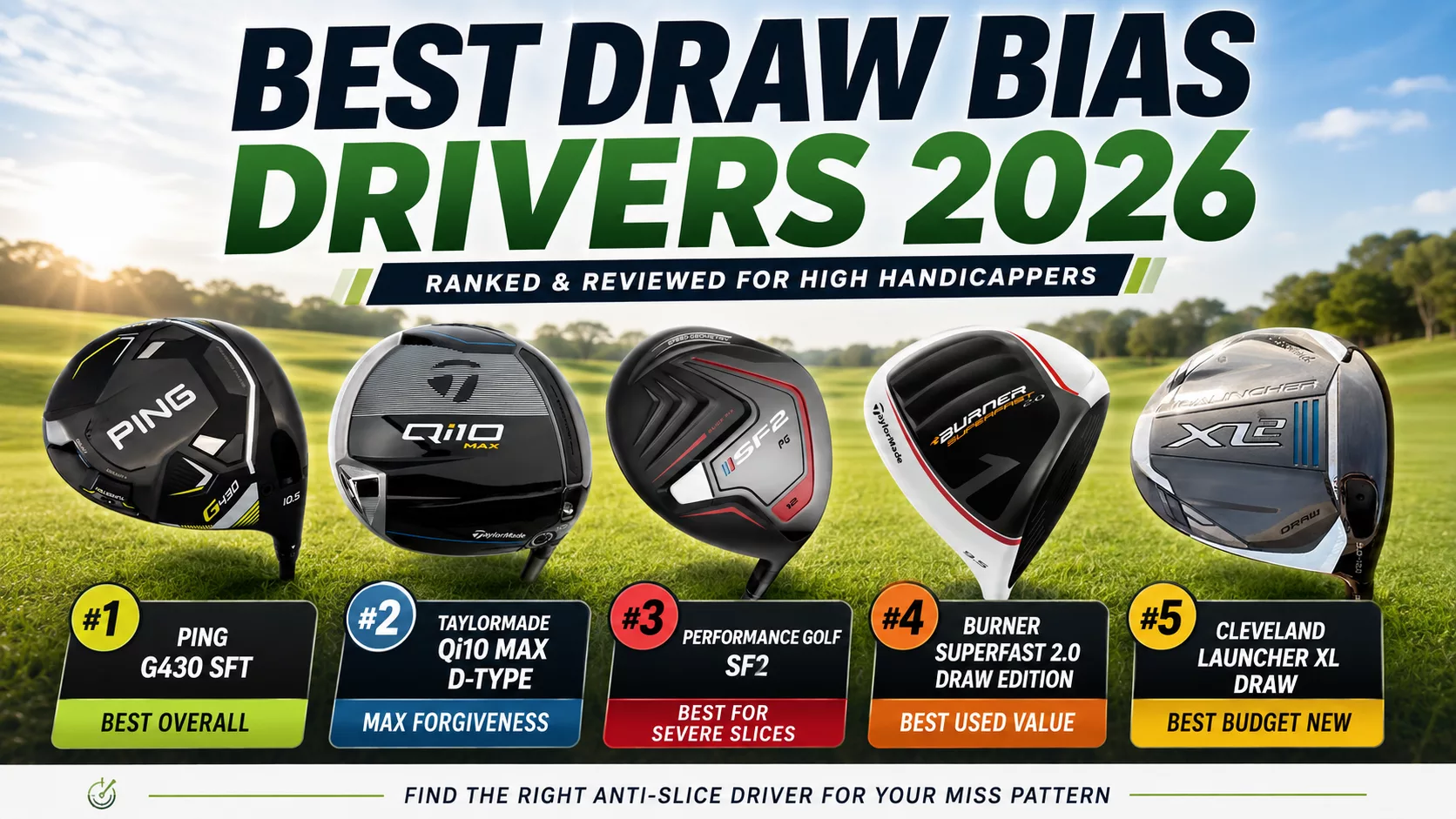
Best Draw Bias Drivers 2026: Ranked and Reviewed for High Handicappers
Quick answer: The best draw bias drivers for high handicappers in 2026 are the Ping [...]
Budget Golfer’s Complete Guide: Save $2,000+ This Year
Master the art of affordable golf without sacrificing your passion for the game Bottom Line [...]