This website uses cookies to improve your experience. We\'ll assume you\'re ok with this, but you can opt-out if you wish. Read More
How Good Do You Need to Be to Play a Golf Course? There’s No Skill Requirement — Only a Pace Requirement
Nobody checks your scorecard at the gate. There is no minimum skill level to play a golf course, and courses don’t test you. The only thing that matters to the people around you is whether you keep moving — and keeping moving is a skill you can have on your very first round, long before you can hit a decent 7-iron.
That’s the whole answer. Here’s what it means in practice, and how to make your first round a good experience instead of an anxious one.
How good do you need to be to play a golf course?
Good enough to keep up. That’s it.
Experienced golfers have essentially no opinion about your score. What they notice is whether the group ahead is pulling away while you’re still looking for a ball in the trees. A beginner who shoots 125 but moves briskly is a welcome playing partner. A low handicapper who takes five practice swings over every shot is the one everybody resents.
If you can hit a ball forward reasonably often, carry your own stuff, and be ready when it’s your turn, you’re ready.
What score is “good enough” for a beginner?
There isn’t one. For context, a new golfer commonly shoots somewhere between 110 and 130 on a full 18, and plenty of casual golfers who’ve played for years never break 100.
The useful number isn’t your score — it’s your pace. A foursome should finish 18 in roughly four to four and a half hours. If your group is doing that, nobody cares what’s on the card.
How do you know you’re ready to leave the driving range?
When you can make contact often enough to advance the ball, and you understand what to do when you can’t. Those are different skills, and the second one matters more.
A practical readiness test: at the range, can you hit roughly half your shots somewhere forward — not necessarily straight, just forward? That’s enough. The rest is course management, which you learn on a course, not a range.
One thing the range can’t teach you, and the reason some golfers stall there for months: a range shot has no consequence. On a course you’ll hit a ball into trouble, and the real skill is deciding quickly what to do next. You can only practice that by playing.
What’s the maximum number of strokes you should take on a hole?
Pick up after 8 to 10 strokes on a single hole. Pocket the ball, walk to the next tee, and don’t explain yourself.
This single habit does more for your pace than any swing improvement, and it’s completely normal — beginners who’ve been told “you have to hole out” are following tournament rules that don’t apply to a casual round. Many courses and informal groups use a maximum-score convention precisely so disasters don’t wreck the pace.
For a first round, you can go further: if you’re having a rough hole, pick up at double par and move on. Nobody is counting.
Will other golfers be annoyed if you’re bad?
Overwhelmingly, no — provided you’re moving. Golfers were all beginners once, and most remember it vividly.
If you’re booking alone, you’ll likely be grouped with strangers, which sounds worse than it is — our guide to what happens when courses pair you up covers exactly how it works and the one sentence to say on the first tee. Set expectations early and the social side of it takes care of itself.
The exception, and it’s worth naming honestly: a beginner who holds up play and doesn’t acknowledge it can frustrate people. The fix is small — let faster groups through, keep up with the group ahead, and nobody has a problem with you.
What actually makes a beginner a problem on the course?
Not bad shots. Specifically these:
- Not being ready when it’s your turn. Glove on, club picked, ball in hand before you’re up.
- Hunting for lost balls too long. Three minutes maximum, and honestly, on a $2 ball, one minute is plenty.
- Refusing to let a faster group play through. Waving a group through is a courtesy that earns instant respect.
- Taking multiple practice swings on every shot. One is fine. Three is a pace problem.
- Driving the cart to each player’s ball in sequence instead of dropping one player at theirs.
None of those require any golf ability to fix. That’s the point.
What kind of course should you start on?
A par 3 course first, then an executive course, then a regulation course. That progression saves money, time, and a lot of frustration.
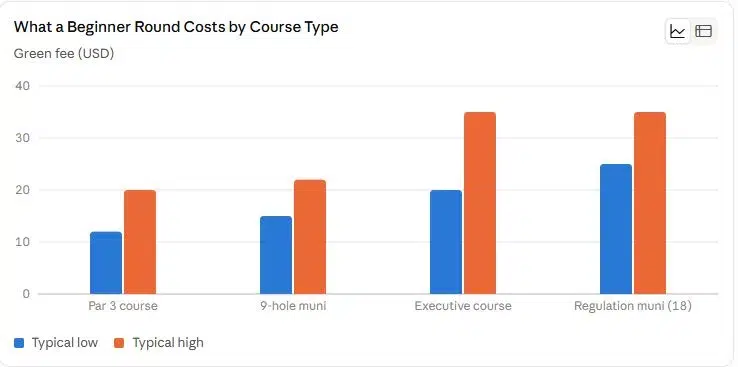
Par 3 courses are all short holes, typically $12–20, and let you play actual golf — real greens, real bunkers, actual holes — without the driver anxiety. Executive courses mix par 3s and short par 4s, usually $20–35, and are the natural bridge. Regulation 18-hole courses are where you go once pace feels manageable.
Municipal courses are the friendliest place to start at every stage — relaxed atmosphere, low stakes, and no one watching. Our guide to judging municipal course quality covers finding good ones near you, and the real-numbers guide to starting golf breaks down what each type actually costs.
Should you play 9 holes or 18 your first time?
Nine. Almost always nine.
Eighteen holes is four-plus hours, and for a new golfer that’s physically and mentally taxing in a way that turns a fun experience into an endurance test by the 14th. Nine holes takes about two hours, costs $15–22, and leaves you wanting more — which is exactly the feeling you want after a first round.
Play nine a handful of times before stepping up. There’s no prize for going 18 early.
When should a beginner tee off?
Weekday afternoons and twilight. Empty tee sheets mean no pressure from behind, no one watching, and often no one pairing you up.
Twilight rates are also 30–50% cheaper, which takes the financial sting out of a round where you’ll lose a few balls. Just check sunset times so you’re not finishing in the dark — the guide covers that math.
What to avoid for a first round: Saturday and Sunday mornings. Busiest tee sheets, most pressure, longest rounds.
Do you need to know the rules of golf?
No. You need about five things: tee off from between the markers, play the ball where it lies when reasonable, don’t move your ball to a better spot, count your strokes honestly if you’re keeping score, and the player farthest from the hole generally goes first.
Everything beyond that — relief procedures, penalty areas, unplayable lies — you can learn gradually or simply handle informally in a casual round. Drop a ball near where it went out, take a stroke, keep moving. No one is officiating.
Do you need a handicap to play?
No. A handicap is a number that lets golfers of different abilities compete fairly, and it’s only needed for tournaments, leagues, and some club events. Casual public golf requires nothing.
If you eventually want one, you’d join a club or golf association and post scores — but that’s a year-two question at the earliest.
What do you need to bring?
Less than you think: clubs, a glove, a dozen cheap balls, tees, water, and whatever you’re comfortable wearing. Golf shoes are optional, and most public courses are relaxed about clothing — our dress code guide covers what’s actually enforced versus what’s reputation.
Bring more balls than you expect to need. Losing six on a first round is completely normal and nothing to be embarrassed about.
The Bottom Line
There’s no skill test to play a golf course. The only real requirement is pace — be ready when it’s your turn, pick up after 8 to 10 strokes, and let faster groups through. Do that and you’re a good playing partner on day one.
Start with nine holes at a par 3 or executive course, on a weekday afternoon, with plenty of cheap balls in the bag. You’re more ready than you think.
What’s holding you back from your first round — or if you’ve already played it, what surprised you most? Leave a comment below. The thing most new golfers worry about beforehand is almost never the thing that actually turns out to matter, and hearing what other people’s first rounds were really like helps more than any checklist.
Frequently Asked Questions
How good do you need to be to play a golf course? There’s no minimum skill requirement. Courses don’t test players, and experienced golfers care about pace of play rather than score. If you can advance the ball reasonably often, be ready when it’s your turn, and pick up after a bad hole, you’re ready to play.
What score should a beginner shoot? New golfers commonly shoot between 110 and 130 for 18 holes, and many casual golfers never break 100 even after years of playing. Score isn’t the measure that matters on a public course — finishing a round in roughly four to four and a half hours is.
How many strokes should a beginner take before picking up? Pick up after 8 to 10 strokes on a hole, pocket the ball, and move to the next tee. This is standard practice in casual golf and does more for pace of play than any swing improvement. On a first round, picking up at double par is entirely reasonable.
Should a beginner play 9 holes or 18? Nine holes, especially for a first round. Eighteen holes takes four or more hours, which is physically and mentally demanding for a new golfer. Nine takes about two hours, costs $15 to $22, and leaves most beginners wanting to come back rather than exhausted.
Do you need to know the rules of golf to play? No. Five basics cover casual play: tee off between the markers, play the ball where it lies when reasonable, don’t improve your lie, count strokes honestly if scoring, and the player farthest from the hole generally plays first. More complex rules can be learned gradually or handled informally.
Related Post
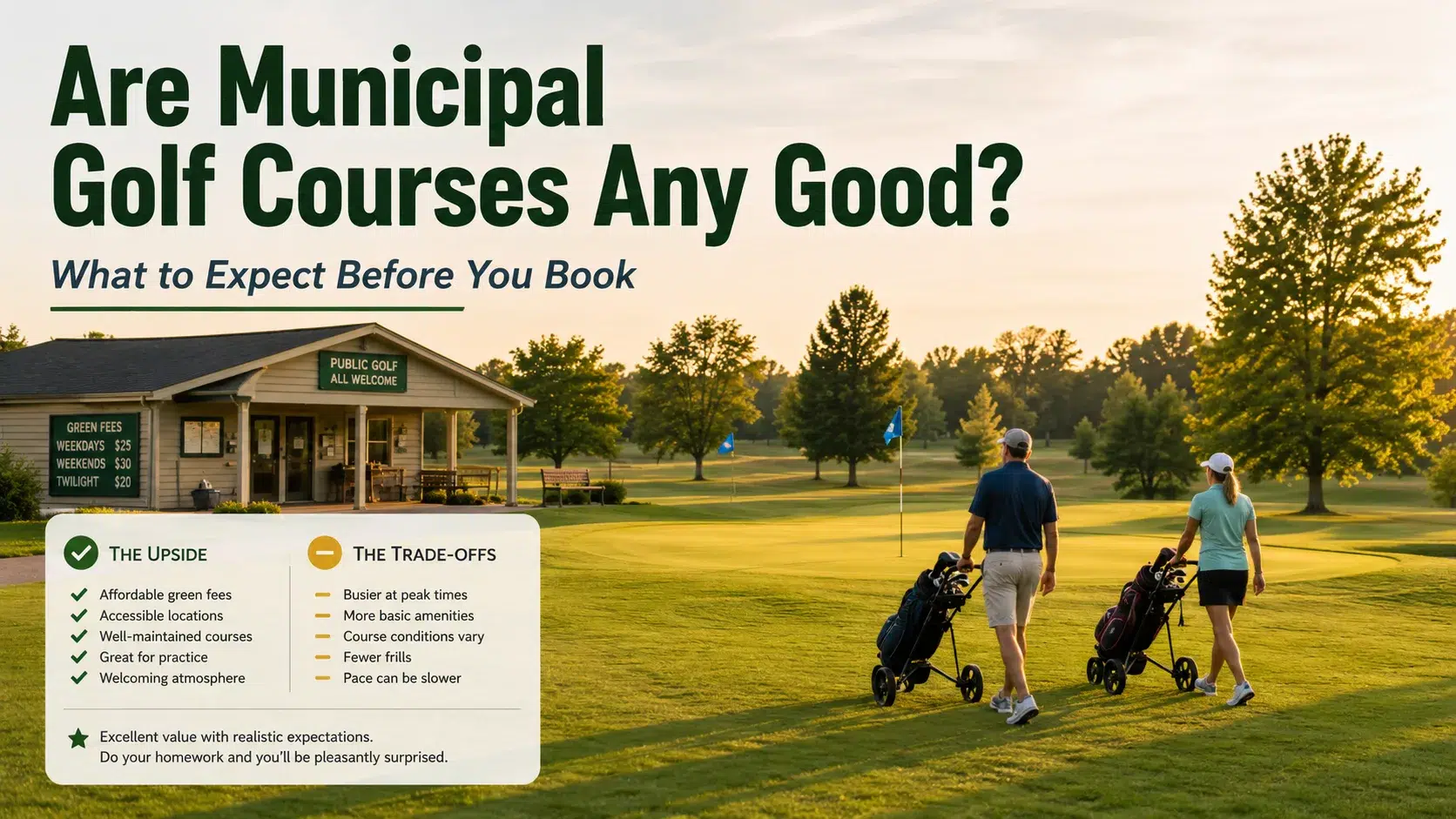
Are Municipal Golf Courses Any Good? What to Expect in 2026
Are Municipal Golf Courses Any Good? What to Expect Before You Book Municipal golf courses [...]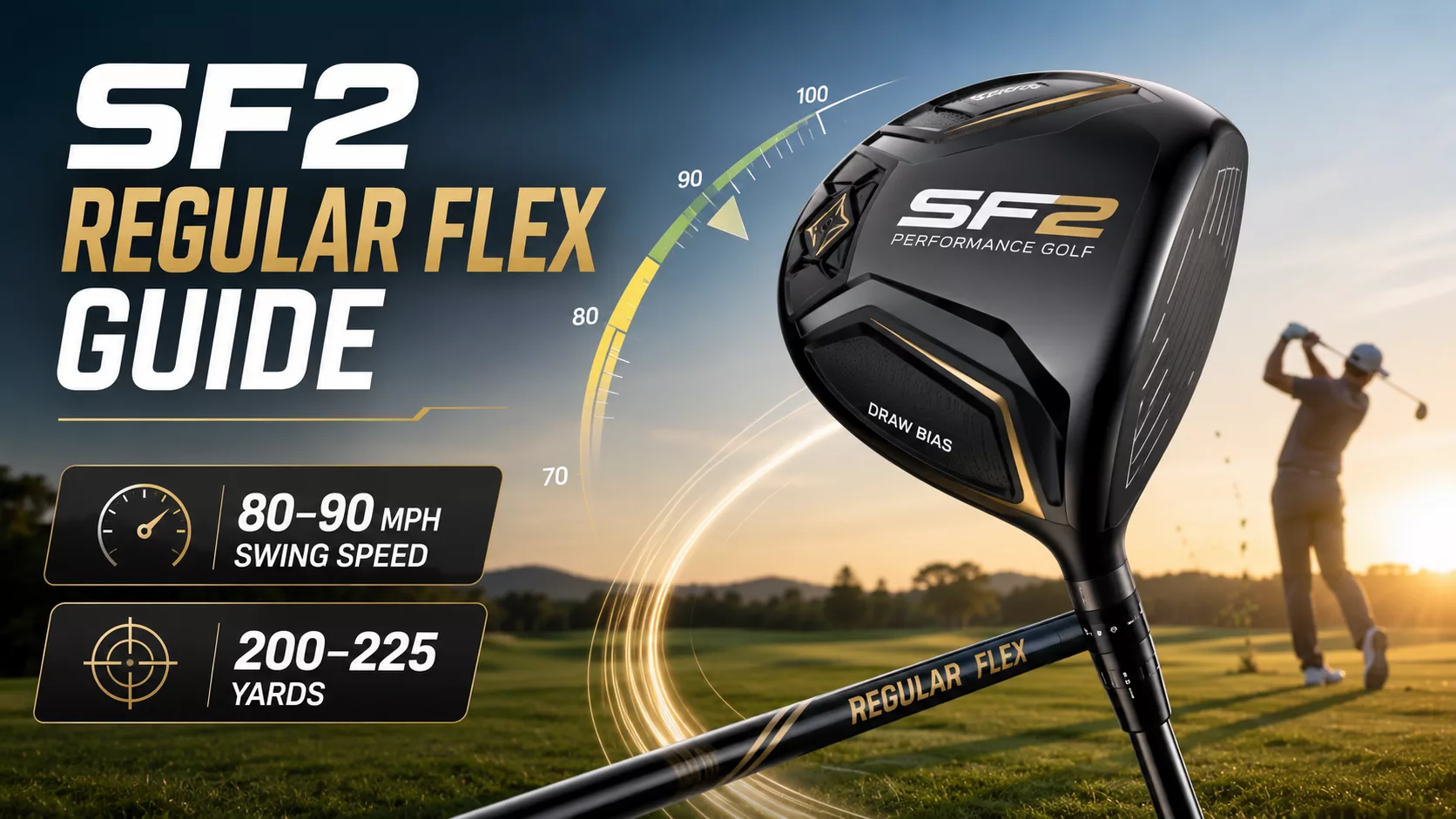
What Swing Speed Do I Need for the SF2 Regular Flex? A Complete Fitting Guide
Article At A Glance Getting your shaft flex wrong is one of the fastest ways [...]